




Trailer Solid Rubber Tires: How to Choose Tires for Repetitive Industrial Transport
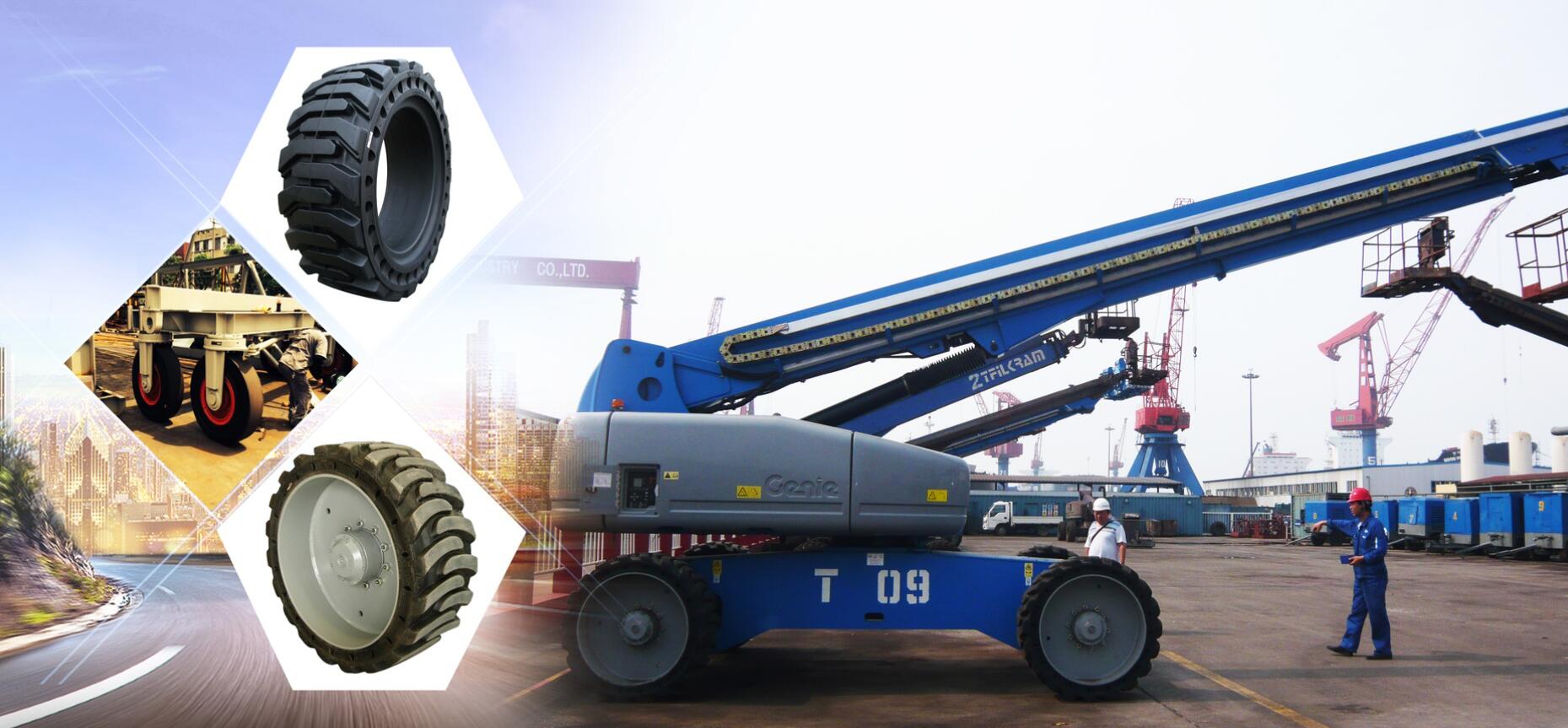
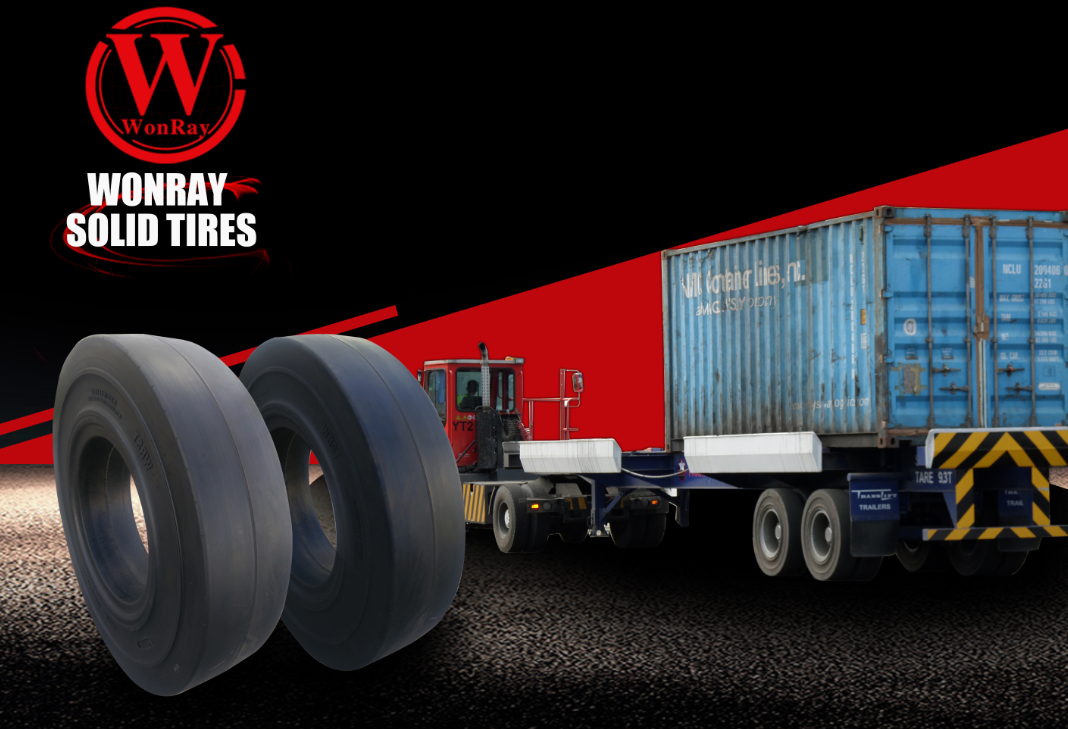
Trailer Solid Rubber Tires are commonly used on industrial trailers and carts that move materials between production lines, storage areas, warehouses, loading points, and outdoor yards. These trailers often operate at relatively low speeds, but they may carry substantial loads and repeat the same route hundreds of times. That working pattern makes reliability, load distribution, rolling resistance, and turning wear more important than high-speed road performance. A solid tire can remove inflation maintenance and conventional puncture downtime, but it still has to be selected around the trailer rather than treated as a universal replacement for any air-filled tire.
Start With Load Per Wheel, Not Just Trailer Capacity
The trailer may be rated for several tonnes, but the tire does not experience the total capacity evenly. The actual load on each wheel depends on the number of wheel positions, axle layout, cargo location, frame stiffness, and whether the trailer is level during operation. A centrally placed load can be distributed relatively evenly, while an offset load or uneven floor can concentrate much more weight on one wheel. This is why total trailer capacity alone is not enough for tire selection.
A practical calculation begins with the empty trailer weight plus the maximum expected cargo. That total should then be considered against the real wheel arrangement, with some margin for unequal distribution and dynamic effects during starting, braking, and turning. Trailer Solid Rubber Tires need to support the local wheel load without excessive deformation, because too much compression can increase rolling resistance and accelerate heat and wear.
Repetitive Routes Create Predictable Wear Zones
Industrial trailers usually follow consistent paths. A tugger train may move components from storage to an assembly line, a factory cart may shuttle finished goods to packing, or an outdoor trailer may travel between a workshop and a yard. Repetition is useful because it makes the duty cycle predictable, but it also means the same corners, joints, and stopping points create stress every time the trailer passes.
If tire wear is concentrated at one part of the tread, the route may explain more than the tire itself. Tight corners can create lateral scrub, rough thresholds can generate impact, and long straight sections can increase continuous rolling heat. Mapping the route before changing tire type often reveals which part of the application is actually shortening service life.
Why Solid Rubber Can Work Well at Industrial Speeds
Solid tires do not require inflation pressure and cannot suffer a conventional flat caused by a nail, metal fragment, or sharp object. In factories and industrial yards where small debris is difficult to remove completely, this can reduce one common source of unexpected trailer downtime. It also removes routine pressure checks from the maintenance schedule.
The trade-off is that solid rubber generally provides less air cushioning than a pneumatic tire. The trailer may therefore transmit more vibration when crossing broken concrete, deep joints, or rough outdoor surfaces. For low-speed routes on reasonably firm ground, that firmer behavior may be acceptable, especially when puncture resistance is a higher priority. On highly uneven terrain, however, the route and cargo sensitivity deserve closer attention.
Turning Geometry Can Wear Trailer Tires Faster Than Straight Travel
Trailer tires do not all follow the same path during a turn. Depending on axle layout and steering design, some wheels may be forced to scrub sideways because they cannot align perfectly with the turning circle. Multi-wheel trailers can therefore create substantial lateral friction even at low speed. The tighter the turn, the stronger the scrub can become.
This is an important reason why Trailer Solid Rubber Tires sometimes show shoulder wear or flat abrasion long before the center tread is fully used. The cause may not be poor rubber quality. Steering geometry, axle alignment, fixed wheel orientation, and route design can all contribute. When a particular wheel position repeatedly wears faster, inspecting the trailer layout can be more useful than simply installing a harder tire.
Indoor and Outdoor Routes Need Different Priorities
An indoor trailer operating on smooth factory concrete may prioritize low rolling resistance, predictable tracking, quiet movement, and floor-friendly behavior. An outdoor industrial trailer may need greater resistance to abrasion, water, temperature changes, and surface irregularities. A mixed route that crosses both environments must balance these requirements.
The majority of operating time should guide the selection. If ninety percent of the route is indoors and only a short section passes through a yard, choosing a tire solely for rough outdoor traction may create unnecessary rolling resistance inside the plant. If the trailer spends most of its shift on broken asphalt and gravel, a wheel designed only for smooth floors may wear rapidly. There is no single “industrial trailer tire” that is ideal for every route.
Wheel Diameter Has a Direct Effect on Rolling Effort
Larger-diameter wheels generally cross small joints, thresholds, and floor irregularities with less resistance because the approach angle is shallower. This can make a noticeable difference on heavily loaded trailers, particularly when a small towing vehicle has to start the load repeatedly. Smaller wheels may fit compact equipment better, but they can require more effort to roll over the same obstacle.
Diameter cannot be increased without limits because frame clearance, axle height, coupling geometry, and existing wheel dimensions must remain compatible. Even so, when a trailer feels unusually difficult to move or creates repeated impact at floor joints, wheel diameter should be reviewed alongside bearing condition and tire compound rather than ignored.
Bearings, Hubs, and Mounting Can Affect Tire Life
A tire is only one part of the rolling system. A worn bearing, damaged hub, bent axle, loose mounting, or misalignment can create drag and uneven loading that quickly shows up as tire wear. Replacing the rubber while leaving the mechanical problem untouched can produce the same failure again.
Regular inspection should therefore include free wheel rotation, bearing noise, hub condition, mounting hardware, and alignment. If one wheel runs hotter than the others or requires more force to rotate, the problem may be mechanical rather than material-related. This is especially important on trailers that operate for long hours because small rolling losses become significant over repeated cycles.
When Trailer Solid Rubber Tires Are a Good Fit
Solid rubber is particularly practical for trailers that operate at moderate industrial speeds, carry regular loads, and work where puncture interruptions or inflation maintenance are undesirable. Factory logistics, manufacturing plants, warehouses, industrial yards, and internal tugger routes are common examples. The most suitable applications usually involve firm surfaces and predictable routes where the benefits of puncture resistance outweigh the reduced cushioning compared with pneumatic tires.
They are less automatically suitable for high-speed road trailers or extremely rough off-road work. Those are different operating categories with different thermal, ride, and regulatory requirements. Industrial Solid Tires should be selected for industrial trailer duty rather than assumed to be a substitute for road-going trailer tires.
A Practical Selection Process for Trailer Solid Rubber Tires
Before finalizing a tire, collect the application details that influence rolling and wear:
- Existing tire size, wheel or rim dimensions, and mounting type
- Empty trailer weight and maximum cargo weight
- Number of wheels and expected load per wheel
- Typical operating speed and daily travel distance
- Minimum turning radius and frequency of tight turns
- Indoor, outdoor, or mixed route conditions
- Floor joints, thresholds, rough areas, and puncture hazards
- Existing wear pattern, bearing condition, and wheel alignment
These details provide a better basis for tire selection than a simple size match. If the main problem is puncture downtime, solid construction may solve it. If the problem is high rolling effort, wheel diameter or bearing condition may be more important. If the shoulders wear rapidly, turning geometry deserves attention.
Matching the Tire to the Trailer and Route
The best Trailer Solid Rubber Tires are those matched to how the trailer actually works. Load support, puncture resistance, rolling effort, turning wear, floor condition, and mechanical fit all need to be balanced. A tire with excellent abrasion resistance can still perform poorly if it is overloaded or mounted on a dragging bearing, while a correctly sized tire may wear quickly if the route forces severe scrubbing at every turn.
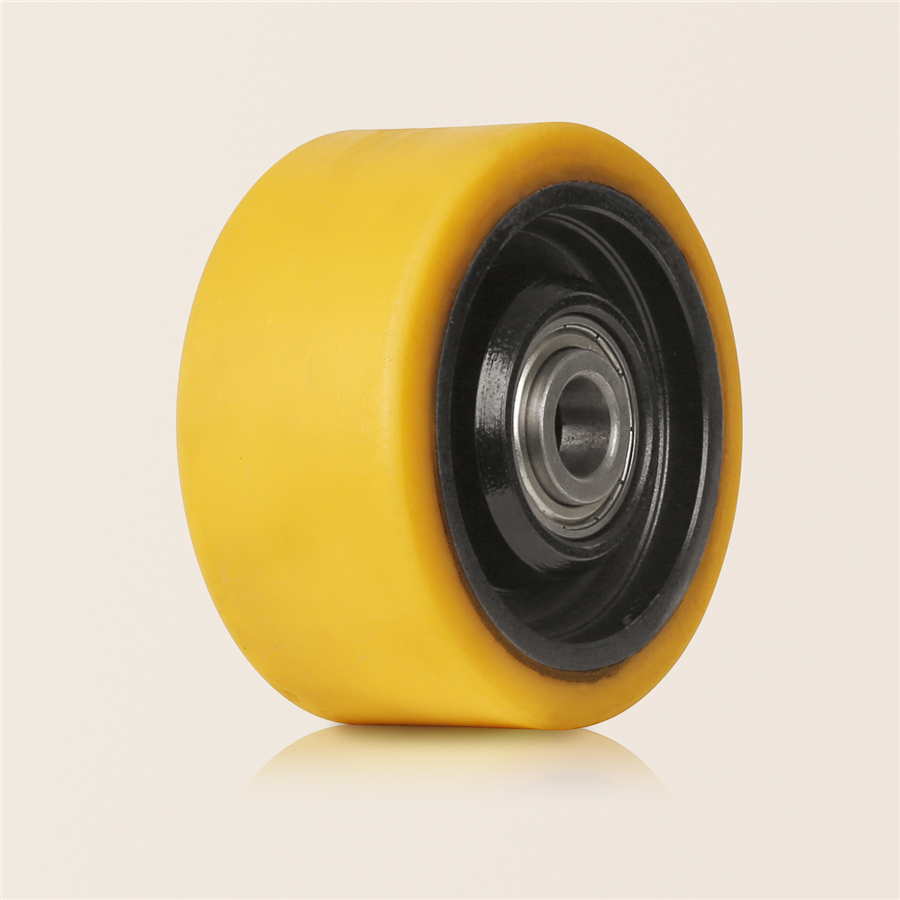
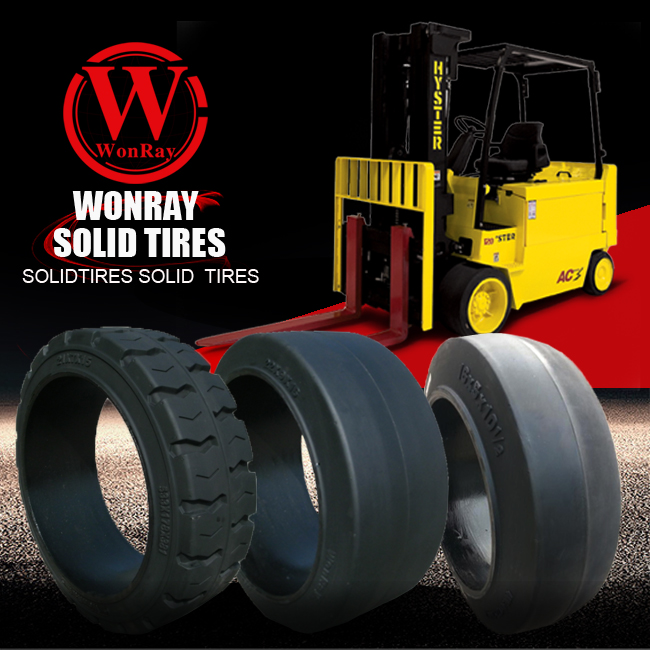
WonRay supplies industrial solid tire and rubber wheel solutions for trailers, carts, forklifts, and other material-handling equipment. For an industrial trailer application, sharing the existing tire size, trailer load, number of wheel positions, route surface, turning radius, and current wear problem helps narrow the selection quickly. If the current tires are repeatedly punctured, difficult to roll, or wearing unevenly around corners, those symptoms are useful application data and can guide a more appropriate solid tire solution.
FAQ
Where are Trailer Solid Rubber Tires commonly used?
They are commonly used on industrial trailers, factory carts, internal logistics equipment, and low-speed material-handling systems in factories, warehouses, and industrial yards.
Do solid trailer tires require air pressure maintenance?
No. Solid rubber tires do not depend on inflation pressure, so routine pressure checks and conventional puncture repairs are eliminated.
Why do some trailer tires wear heavily at the shoulders?
Tight turns and fixed axle geometry can force the tires to scrub sideways. Misalignment and uneven load distribution can increase this wear.
What should be checked before selecting a solid trailer tire?
Check tire and wheel dimensions, load per wheel, operating speed, route surface, turning radius, daily distance, puncture exposure, bearing condition, and existing wear pattern.