
Solid Trailer Wheels: How Wheel Selection Affects Trailer Maneuverability
Trailer maneuverability depends on more than the towing vehicle and trailer structure. Wheel dimensions, configuration, and material also influence how smoothly a trailer moves, turns, and navigates confined spaces. In warehouses, factories, and industrial transport areas, trailers often need to pass through narrow aisles, turn around loading zones, and move between workstations. Poorly matched wheels can increase rolling resistance and make these movements more difficult. Solid Trailer Wheels are commonly used in applications where puncture resistance, stable load support, and reduced maintenance are important. However, durability alone does not guarantee good maneuverability. The right wheel selection must also consider trailer dimensions, load distribution, floor conditions, and turning requirements.
Why Wheel Selection Influences Trailer Movement
When a trailer travels in a straight line, its wheels mainly support the load and enable forward or backward movement. During a turn, however, the wheels must accommodate changes in direction while maintaining contact with the floor. Depending on the trailer configuration, some wheels follow different turning paths and experience additional lateral forces.
If wheel dimensions or mounting positions are unsuitable, the trailer may encounter increased resistance, dragging, or difficulty maintaining a smooth turning path. This is particularly noticeable in confined industrial spaces where frequent directional changes are necessary.
Wheel diameter, width, and construction all affect movement. Smaller wheels may suit compact trailers operating on smooth indoor floors, while larger wheels can generally cross minor floor irregularities more easily. Wider wheels may provide a larger contact area, but they do not automatically improve maneuverability. The actual result depends on wheel material, tread characteristics, and floor conditions.
Therefore, selecting Solid Trailer Wheels requires evaluating the complete trailer setup rather than considering load capacity alone.
How Wheel Dimensions Affect Turning Performance
Wheel diameter influences how easily a trailer passes over floor joints, cracks, and small obstacles. Larger wheels generally roll over these irregularities more smoothly, reducing the resistance encountered during movement. They can be useful for trailers operating across different floor sections or on relatively rough industrial surfaces.
Smaller wheels offer other advantages. They can help maintain a lower trailer loading height and may be suitable for compact equipment with limited installation space. However, when used on uneven floors, they may encounter greater resistance and transmit more impact to the trailer structure.
Wheel width also affects contact with the ground. A wider wheel can distribute pressure across a larger area, depending on its construction and the supported load. However, excessive width may increase contact resistance in certain applications. Buyers should balance load requirements with the need for smooth movement.
Mounting dimensions and frame clearance are equally important. Wheels positioned too close to the trailer structure may interfere with other components during turning. Checking axle dimensions, mounting arrangements, and available clearance helps prevent installation problems.
Fixed Wheels and Swivel Wheels: Choosing the Right Configuration
Wheel configuration directly affects directional control. Fixed wheels are designed to travel along a consistent direction. They provide predictable straight-line movement but may limit flexibility when a trailer needs to navigate tight corners.
Swivel casters offer greater directional flexibility because their mounting assemblies rotate as the trailer changes direction. This makes them useful in warehouses, production areas, and other environments where trailers frequently move around obstacles.
However, swivel casters also have specific operating characteristics. When movement begins or the trailer changes direction, the caster may need to rotate into alignment before rolling smoothly. Under heavy loads, this adjustment can require additional force. The caster's load rating and construction must therefore match the application.
Some industrial trailers combine fixed wheels with swivel casters. Fixed wheels help maintain directional stability, while swivel units support turning and repositioning. The appropriate arrangement depends on trailer length, load distribution, towing method, and movement frequency.
When choosing Solid Trailer Wheels, operators should consider whether the trailer mainly follows straight routes or frequently changes direction within limited spaces.
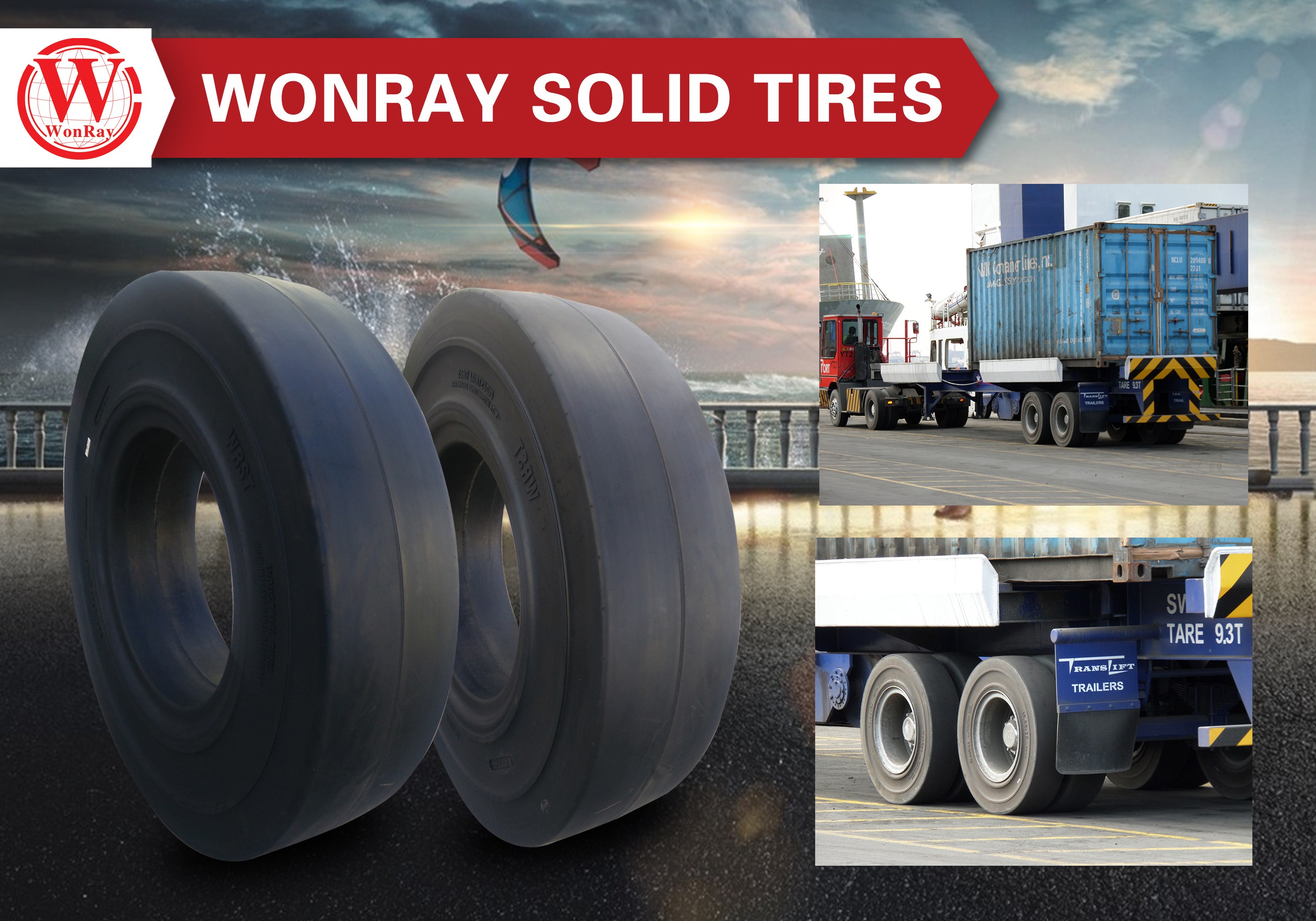
Matching Solid Trailer Wheels to Floor Conditions
Floor conditions have a direct impact on rolling resistance and handling. Smooth concrete generally provides stable contact, allowing wheel selection to focus on load support, durability, and movement efficiency.
Industrial floors may contain expansion joints, drainage channels, cracks, and transitions between different surfaces. When a loaded trailer crosses these areas, the wheels experience additional impact. Wheel diameter and construction should be suitable for the irregularities encountered during normal operation.
Outdoor applications introduce further considerations. Asphalt, compacted ground, and rough concrete create different levels of resistance. Trailers that move between indoor and outdoor areas need wheels capable of handling the most demanding regular route.
Solid construction eliminates the risk of punctures and air-pressure loss, which is valuable in environments containing sharp debris. Nevertheless, solid wheels do not automatically provide a smoother ride. Their ability to absorb impacts depends on the wheel material, structure, and overall design.
For this reason, Solid Trailer Wheels should be selected according to actual operating surfaces rather than general assumptions about durability.
Important Factors Before Selecting Trailer Wheels
A suitable wheel must satisfy both technical requirements and daily operating needs. Before purchasing, operators should evaluate several practical points:
-
Load distribution: Determine the load supported by each wheel, including possible uneven weight distribution. Individual wheels must have sufficient rated capacity for the actual application.
-
Turning requirements: Consider how frequently the trailer changes direction and whether it operates in narrow aisles. The balance between fixed wheels and swivel casters should reflect these movement patterns.
-
Floor conditions: Identify the main operating surfaces and any regular obstacles, such as floor joints or drainage channels.
-
Installation compatibility: Check wheel diameter, width, axle or mounting dimensions, and clearance from the trailer frame.
-
Operating method: Consider whether the trailer is moved manually or by powered equipment. Wheel capacity and permitted operating conditions must match the actual use.
These checks help avoid selecting wheels based only on their maximum load rating while overlooking their influence on handling and movement.
Maintaining Maneuverability During Daily Operation
Even correctly selected wheels can become harder to operate as components wear. Uneven wear, damaged mounting parts, loose fasteners, and accumulated debris may increase rolling resistance.
Regular inspections should include the wheel surface, hub, mounting hardware, and caster assembly. Swivel casters should rotate freely without excessive looseness or obstruction. If a trailer suddenly becomes harder to turn or consistently pulls to one side, operators should check for wheel damage, uneven loading, or installation problems.
For industrial applications involving frequent trailer movement, matching wheel dimensions, load ratings, and construction to the actual working environment is essential. An experienced industrial wheel manufacturer such as WonRay can help evaluate these requirements and identify suitable wheel solutions for different trailer applications.
Conclusion
Trailer maneuverability is influenced by wheel dimensions, configuration, load distribution, and floor conditions. Selecting Solid Trailer Wheels requires more than checking whether a wheel can support the required weight. The wheels must also provide suitable rolling performance, directional control, and reliable operation across daily routes. Careful selection and regular inspection help improve trailer handling, reduce unnecessary resistance, and support long-term operating efficiency.
FAQs
1. Do larger solid wheels always improve maneuverability?
No. Larger wheels can cross floor joints more easily, but maneuverability also depends on wheel width, mounting position, trailer design, and load distribution.
2. Are swivel wheels suitable for heavy industrial trailers?
They can be suitable when their rated capacity, construction, and mounting arrangement match the trailer's load and operating conditions.
3. Can solid trailer wheels operate on uneven floors?
Yes, depending on their material, diameter, and construction. The severity of floor irregularities should be considered before selecting a wheel.
4. Why does a trailer become harder to turn over time?
Uneven wheel wear, damaged mounting components, obstructed swivel casters, and changes in load distribution can all increase turning resistance.