



Solid Press On Forklift Tires: What to Check Before You Replace a Press-On Tire
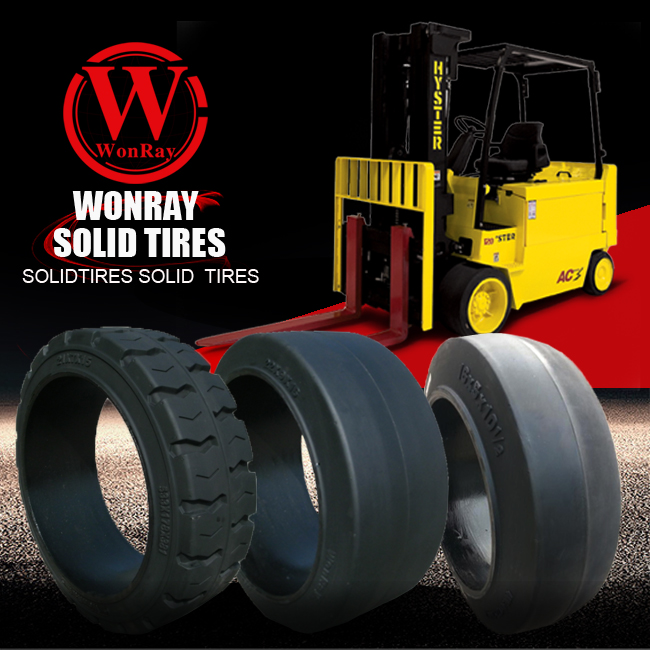
Solid Press On Forklift Tires are compact industrial tires commonly used where forklifts work on relatively smooth, hard surfaces and need a low-profile tire-and-wheel arrangement. Their appearance is simple, but replacement is not simply a matter of finding a tire with a similar outside diameter. The tire, steel band, wheel or hub, press-fit condition, load, floor, and duty cycle all influence whether the replacement will run correctly after installation.
That makes press-on tire work different from changing a conventional pneumatic tire. The installation process itself is part of the fitment. If the band specification is wrong, the mating surface is damaged, or the tire is pressed incorrectly, the result can be poor concentricity, movement between components, abnormal wear, or an unsafe assembly. A good decision on Solid Press On Forklift Tires therefore starts with dimensional and application checks before the old tire is removed.
Solid Press On Forklift Tires Begin With the Correct Band and Hub Match
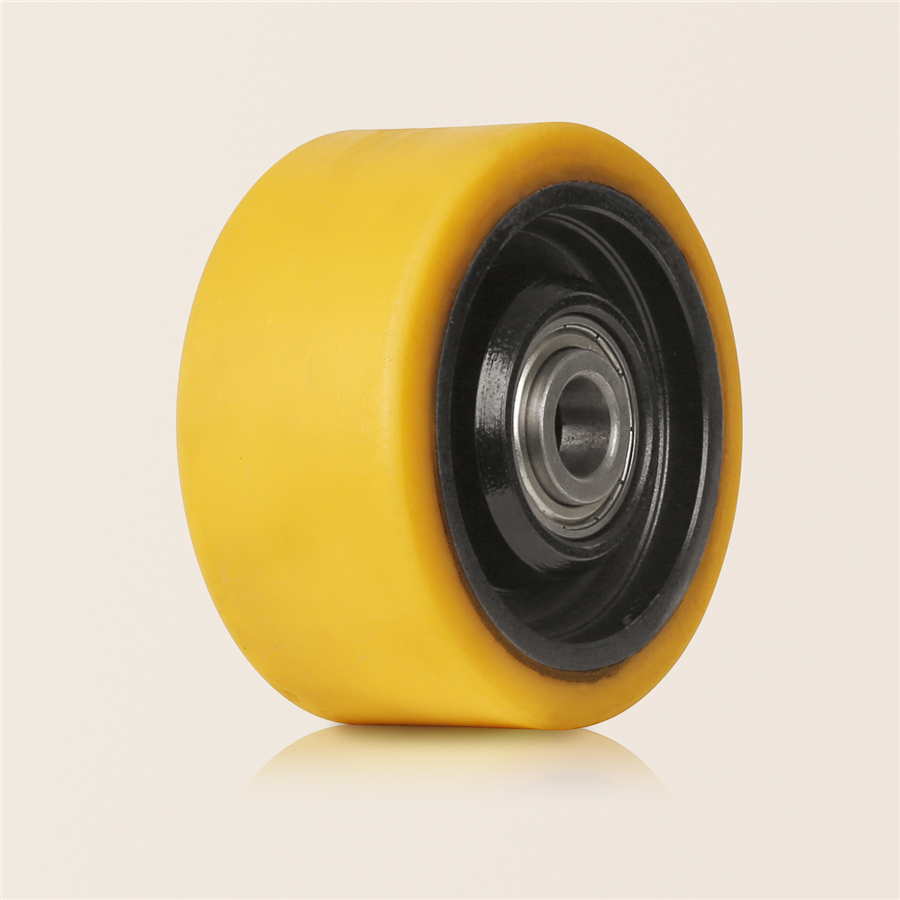
A press-on tire normally uses a rubber tread bonded to a steel band that is pressed onto a matching wheel or hub. Because the assembly relies on a controlled fit, the band dimensions and the mating surface need to correspond correctly. Nominal outside diameter alone cannot confirm compatibility.
Before replacement, record the tire marking, band dimensions, wheel or hub dimensions, width, and any manufacturer identification available on the existing assembly. If the old band has moved, cracked, become distorted, or damaged the mounting surface, simply pressing on another tire may repeat the same problem. Fitment should be treated as a mechanical interface, not only as a tire-size question.
Solid Press On Forklift Tires Should Be Chosen Around the Floor
Press-on tires are often used on hard indoor surfaces because their compact construction provides stable support and direct steering response. However, hard floors also create significant abrasion and transmit more impact through the tire. Smooth warehouse concrete, coated floors, dock plates, expansion joints, and rough transition areas can all change the wear pattern.
A forklift that spends nearly all of its time on clean, level concrete places different demands on the tire from one that repeatedly crosses thresholds or damaged joints. If the route contains large surface defects, a low-profile press-on tire may transmit more shock to the vehicle and load. The application should therefore be checked before assuming that the original tire type remains the best option after the operating environment changes.
Load Is Concentrated in a Small Tire Package
The compact size of Solid Press On Forklift Tires means that load, heat, and deformation need careful attention. A tire may look small compared with a resilient solid tire, but it can still carry substantial industrial loads when correctly specified. The critical point is that the actual load per wheel must stay within the suitable operating range.
Forklifts also shift load dynamically. Braking transfers force forward, turning changes lateral load, and lifting a heavy pallet changes the weight distribution across the axles. Repeated overloading can increase rubber deformation and temperature, while unequal loading can make one tire wear faster than its partner. When a press-on tire has unusually short life, reviewing the working load is often more useful than immediately choosing a harder compound.
Heat Can Be the Hidden Limit in Continuous Operation
Press-on tires work through repeated compression of the rubber tread. That deformation generates heat, especially when the truck operates for long periods, carries heavy loads, travels significant distances, or turns frequently. Because the tire cross-section is compact, operating conditions that appear ordinary can still create a demanding thermal cycle.
Heat-related stress is not diagnosed only by touching the tire after a shift. Look for accelerated wear, changes in rubber condition, repeated failures at similar operating hours, or one wheel position consistently running differently from the others. Mechanical causes such as brake drag, poor bearing condition, or misalignment should also be checked. A tire cannot solve a heat problem caused by a vehicle fault.
The Pressing Process Is Part of Tire Performance
Installation of Solid Press On Forklift Tires requires appropriate equipment and a controlled procedure. The tire has to be aligned with the wheel or hub and pressed evenly so that it seats correctly. Forcing a mismatched component into place is not a substitute for correct fitment.
A workshop should verify the relevant dimensions before pressing and inspect the finished assembly afterward. Concentricity, seating, and visible damage should be checked before the wheel returns to service. The objective is not only to get the tire onto the hub, but to produce an assembly that can rotate consistently under load. If the installer does not have the proper press capacity or fixtures, the risk of damaging components increases.
When Press-On Tires Are a Good Choice
Press-on tires are most suitable when the forklift application values compact dimensions, stable handling, and operation on relatively smooth industrial floors. They are commonly associated with indoor material handling where long suspension travel is not required and the vehicle design is already built around this tire format.
They are less forgiving of severe floor damage than larger, more resilient tire constructions. If a forklift has moved from smooth warehouse work into rough outdoor service, replacing the same press-on tire may preserve fitment but not solve the application problem. Tire type should follow the environment and equipment design together.
A Replacement Checklist for Solid Press On Forklift Tires
Before ordering or installing a replacement, confirm the information that affects both fit and service life:
- exact tire marking and outside dimensions;
- steel band inside diameter, width, and mating dimensions;
- wheel or hub condition and any visible damage;
- forklift model and wheel position;
- typical and maximum load;
- floor type, joints, thresholds, and debris exposure;
- daily working hours, travel distance, and turning frequency;
- current wear pattern and approximate service life.
This checklist prevents a common maintenance shortcut: identifying the tire only by overall size. A precise band and application match is much more useful for preventing repeat problems.
WonRay Support for Solid Press On Forklift Tires
WonRay provides industrial tire solutions for forklift and material-handling applications. For Solid Press On Forklift Tires, a useful recommendation depends on accurate dimensions and a clear description of the working condition. Sharing the old tire marking, band or hub measurements, forklift model, load, floor, and photos of the removed tire gives the technical discussion a much stronger starting point.
If the current problem is short service life, edge wear, band movement, chunking, or excessive heat, include that history when requesting a quotation or replacement option. It is more useful to solve the reason for replacement than simply reproduce the same tire specification. With the correct fitment information and duty-cycle details, the replacement can be evaluated as a complete wheel-and-application solution rather than just another rubber component.
FAQ
Are Solid Press On Forklift Tires installed like pneumatic tires?
No. A press-on tire is mechanically pressed onto a compatible wheel or hub. Correct band dimensions, mounting surfaces, and pressing equipment are important to the installation.
Can I select a press-on tire only by outside diameter and width?
No. The band and hub interface also need to match. Similar external dimensions do not guarantee correct press fit.
Why does one press-on tire wear faster than the tire on the opposite side?
Possible causes include unequal load, alignment, brake drag, turning patterns, floor condition, or a fitment problem. The vehicle and wheel assembly should be checked before replacement.
What information is needed for a Solid Press On Forklift Tires quotation?
Provide the tire marking, band or hub dimensions, forklift model, wheel position, load, floor condition, operating hours, and photos of the current tire and wheel when possible.