
Skid Steer Solid Tires: How to Choose the Right Tires for Demanding Job Sites
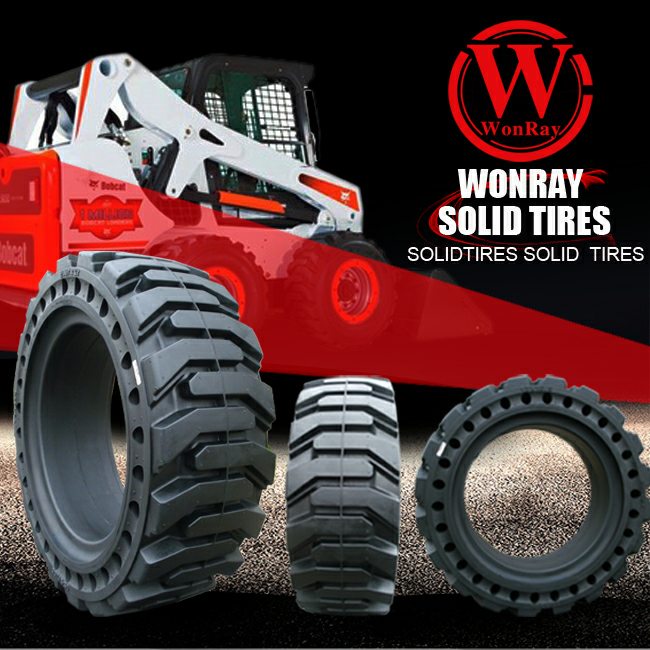
Skid steer loaders are often used where working conditions are too rough for standard pneumatic tires to perform reliably. Construction debris, demolition areas, recycling yards, compacted gravel, concrete surfaces, and other abrasive job sites can expose tires to sharp objects, repeated impacts, and constant turning. In these conditions, skid steer solid tires can provide a practical solution when minimizing puncture-related downtime is a priority.
The important point is that choosing a solid tire is not simply a matter of replacing an air-filled tire with a non-pneumatic option. The tire still has to match the skid steer loader, operating surface, load, working speed, and expected duty cycle. A tire that performs well on a relatively smooth industrial surface may behave differently on rough construction ground. Understanding these differences before replacement can help prevent premature wear and unnecessary maintenance.
What Makes Skid Steer Solid Tires Suitable for Rough Job Sites?
One of the main reasons solid tires are considered for skid steer loaders is their resistance to puncture-related failures. Pneumatic tires depend on maintaining internal air pressure, so damage from nails, scrap metal, broken concrete, or other sharp debris can quickly interrupt operation. A solid tire does not depend on air pressure in the same way, which changes the type of tire-related downtime an operator has to deal with.
This can be particularly useful for machines working in environments where debris is difficult to control. A skid steer used for demolition, material handling, landscaping, recycling, or construction may repeatedly encounter objects that would create problems for conventional pneumatic tires. In such applications, reducing the possibility of sudden punctures can be more important than maximizing ride comfort.
However, puncture resistance should not be treated as the only selection criterion. Solid construction changes how the tire responds to impacts, heat, turning forces, and uneven ground. The right tire therefore needs to be considered as part of the complete operating environment rather than as an isolated component.
Start With the Working Surface
The surface under the skid steer has a direct effect on how quickly a tire wears and how much stress it experiences. Before selecting skid steer solid tires, it is useful to identify the surfaces the machine will encounter most frequently.
Typical working conditions may include:
- Concrete and paved surfaces: Frequent turning and repetitive travel can create significant friction and heat, making tread design and rubber characteristics important.
- Gravel and compacted aggregate: Loose stones can increase abrasion and impact, particularly when the machine is carrying heavy loads.
- Construction and demolition areas: Sharp debris creates a higher risk for conventional pneumatic tires and makes puncture resistance particularly valuable.
- Recycling and scrap-handling areas: Metal fragments and other debris can create repeated tire hazards, while irregular loads can increase mechanical stress.
- Mixed job sites: When the skid steer regularly moves between hard surfaces and rough ground, the tire needs to balance traction, durability, and resistance to wear.
The more severe the surface conditions, the more important it becomes to evaluate the tire as a complete working system. Simply choosing the largest or heaviest-looking tire does not automatically produce better results.
Tire Size Should Match the Machine and Application
When replacing a tire, the correct size should be established from the machine specification and existing wheel configuration rather than estimated visually. Tire dimensions influence clearance, load distribution, operating height, and the relationship between the tire and the machine. An incorrect size can create problems even when the tire itself is designed for heavy-duty work.
It is also important to consider whether the replacement is intended for the same operating conditions as the original tire. A tire may physically fit the machine but still be unsuitable for the actual workload. For this reason, size verification should be combined with an assessment of surface, load, operating hours, and turning conditions.
When Solid Tires Can Reduce Downtime
For many skid steer applications, the value of a solid tire is connected less to a single performance characteristic and more to operational continuity. A pneumatic tire damaged by a sharp object may require an immediate repair or replacement before the machine can return to work. On a busy job site, that interruption can affect loading, material movement, and other tasks that depend on the skid steer.
Solid tires are particularly relevant when puncture-related downtime is a recurring problem. They can also make sense where access to tire service is limited or where the machine operates in an environment with persistent debris. In these situations, reducing the frequency of unexpected tire failures can simplify maintenance planning.
At the same time, solid tires are not automatically the right choice for every skid steer. If the machine operates primarily on surfaces where ride comfort, low rolling resistance, or specific pneumatic characteristics are more important, other tire configurations may remain appropriate. The decision should always follow the actual operating requirements.
Common Problems After Choosing the Wrong Solid Tire
Even when a machine has been converted to solid tires, poor results can occur if the tire is not matched correctly to the application. Several problems are worth checking when tire performance is below expectations:
- Rapid tread wear may indicate excessive turning on abrasive surfaces, an unsuitable tread pattern, or operating conditions that are more severe than originally expected.
- Uneven wear can point to differences in loading, wheel condition, machine setup, or the way the skid steer is being operated. The wear pattern is often more useful than simply looking at the remaining tread depth.
- Excessive heat during operation may become more noticeable when the machine works for long periods on hard surfaces with frequent turning. In this situation, operating conditions and tire construction should be reviewed together.
- Poor traction does not necessarily mean the tire is defective. The tread design may simply not match the surface on which the skid steer spends most of its working time.
- Unexpected clearance or fitment issues can occur when the replacement size is selected without checking the machine and wheel specifications. Correct dimensions should always be confirmed before installation.
These problems show why tire selection should begin with the machine and its working conditions rather than with a generic “heavy-duty” label.
How to Get More Service Life From Skid Steer Solid Tires
Once the correct tire has been selected, operating practices still influence service life. Avoiding unnecessary high-speed travel, excessive spinning, and aggressive turning can reduce unnecessary tread stress. On hard surfaces, controlled turning is particularly important because skid steer steering movements can create considerable friction between the tread and ground.
Regular inspection is also useful. Look for uneven tread wear, damaged areas, changes in the tire profile, and unusual wear between different wheels. Comparing the condition of the tires over time can help identify whether a problem is developing before it affects machine productivity.
The goal is not simply to make a tire last as long as possible. A tire should provide a reasonable balance between durability, traction, stability, and operating efficiency for the specific machine and application.
Choosing Skid Steer Solid Tires for Your Application
There is no single solid tire specification that works equally well for every skid steer loader. The selection should be based on several factors working together:
- Machine and wheel specifications
- Tire size and required fitment
- Surface type and debris conditions
- Typical load and duty cycle
- Frequency of tight turns
- Operating hours and travel patterns
- Required traction
- Expected tire service life
This approach is more reliable than choosing a tire solely by size or by the promise of being “puncture proof.” The operating environment determines how the tire will actually perform.
For example, a skid steer working mainly inside a recycling facility may have very different requirements from one working on a construction site with gravel and broken concrete. Both machines may need solid tires, but their tread and operating priorities can be different.
How WonRay Can Help With Skid Steer Solid Tire Selection
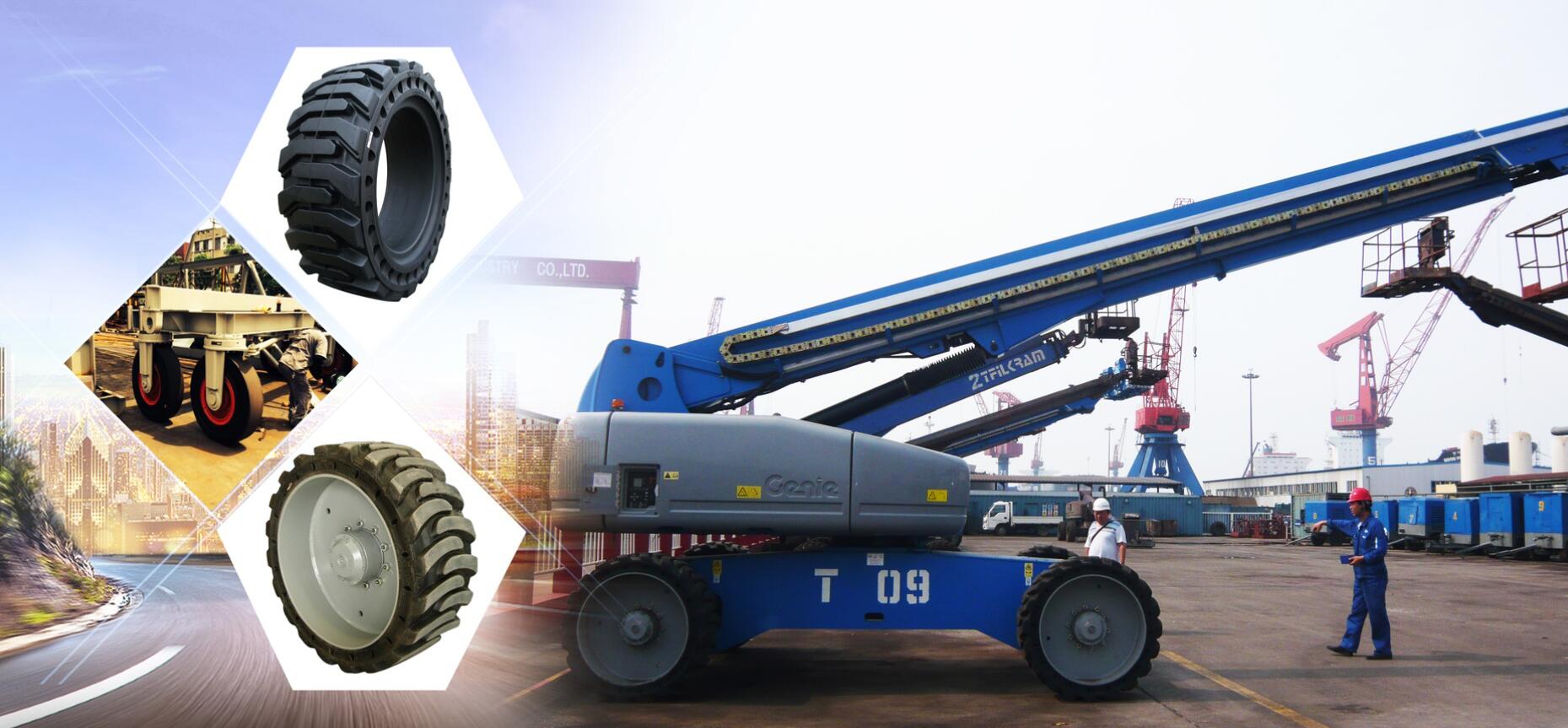
For applications that require solid tires for skid steer loaders, WonRay provides solid tire options for different industrial and equipment requirements. The company's product range covers skid steer-related specifications including 10-16.5, 12-16.5, and 14x17.5, which are also represented in the project's keyword and product reference materials.
The important step is to match the tire with the actual machine and working environment rather than selecting a specification based only on dimensions. If you are evaluating skid steer solid tires for construction, material handling, recycling, landscaping, or another demanding application, provide the machine model, current tire size, working surface, and typical operating conditions. These details can be used to identify a more suitable tire configuration for the application.
FAQ
Are skid steer solid tires suitable for construction sites?
They can be suitable for construction environments where sharp debris and rough surfaces create frequent puncture risks. The final choice should also consider the machine size, surface conditions, load, tread requirements, and operating pattern.
What sizes are available for skid steer solid tires?
Common skid steer-related sizes in the project reference materials include 10-16.5, 12-16.5, 14x17.5, 30x10-16, and 33x12-20. The correct size should always be confirmed against the machine and wheel specifications.
Do solid tires eliminate all skid steer tire maintenance?
No. Solid tires reduce air-related and puncture-related problems, but they still require inspection for tread wear, uneven wear, damage, heat-related issues, and other signs of operating stress.
How do I choose the right solid tire for a skid steer?
Start with the machine and wheel specifications, then evaluate the working surface, debris level, load, operating hours, turning frequency, and traction requirements. These factors together provide a better basis for choosing the appropriate solid tire than size alone.