In industries where equipment operates under constant pressure, tire reliability is not optional—it is essential. From recycling plants filled with sharp debris to construction sites covered in rubble, traditional tires often fail under stress. Puncture proof molded solid tires are engineered to solve this problem by delivering uninterrupted performance, even in the most aggressive working conditions.
The Challenge with Conventional Tires in Industrial Use
Industrial environments are fundamentally different from standard road conditions. Equipment is exposed to:
● Sharp materials such as metal scraps, nails, and glass
● Heavy and uneven loads during lifting and transport
● Continuous operation with minimal downtime allowance
● Hard surfaces that accelerate wear and tear
Pneumatic tires, while widely used, are vulnerable in such conditions. A single puncture can stop operations, increase maintenance costs, and affect productivity. This is where molded solid tires provide a clear advantage.
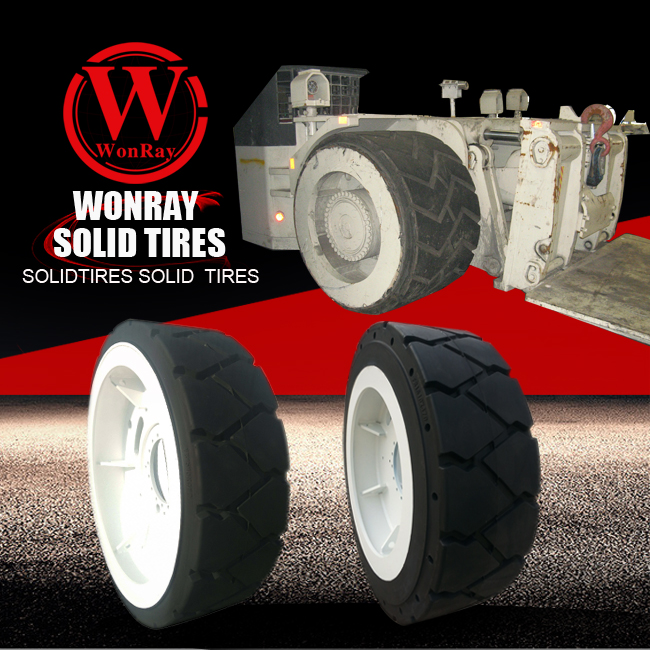
A puncture proof molded solid tire is a fully solid rubber tire manufactured through high-pressure molding and vulcanization. Unlike foam-filled or pneumatic tires, it contains no air cavity and is structurally reinforced throughout.
This design ensures:
● Complete resistance to punctures and air leaks
● Uniform density for better load distribution
● Strong bonding between rubber layers
● Consistent shape under pressure
The result is a tire that can operate continuously without the typical risks associated with air-filled designs.
Engineering Behind Molded Solid Tire Performance
The performance of these tires is rooted in their material composition and manufacturing precision.
High-Density Rubber Compounds
Advanced rubber formulations are used to enhance durability and resistance.
● Improved abrasion resistance for longer lifespan
● Enhanced heat resistance for continuous operation
● Optimized elasticity to reduce internal stress
Controlled Molding Process
The molding process ensures structural consistency.
● High-pressure compression removes internal defects
● Precision molds maintain dimensional accuracy
● Uniform curing improves overall strength
Layered Structural Design
Most molded solid tires are engineered with multiple layers.
● Outer layer: resistant to wear and surface damage
● Middle layer: absorbs shocks and vibrations
● Inner layer: supports heavy loads and maintains shape
This structure balances strength, durability, and limited flexibility.
Performance Advantages in Real-World Applications
Puncture proof molded solid tires are designed for practical performance rather than theoretical benefits.
● Uninterrupted operation
No flats or air pressure issues mean machines can run longer without stops.
● Higher operational safety
Stable structure reduces risks associated with sudden tire failure.
● Predictable performance
No variation in tire pressure ensures consistent handling and traction.
● Reduced maintenance workload
Eliminates the need for tire inspections related to air pressure.
These benefits directly contribute to increased productivity.
Where Molded Solid Tires Deliver the Most Value
Different industries benefit from these tires in different ways.
Recycling and Waste Management
● Frequent exposure to sharp and hazardous materials
● High risk of tire damage with pneumatic options
● Need for uninterrupted processing operations
Molded solid tires significantly reduce downtime in these environments.
Construction Equipment
● Operation on uneven, abrasive surfaces
● Heavy loads and constant movement
● Exposure to debris and sharp edges
Solid tires improve reliability and reduce maintenance interruptions.
Ports and Logistics Centers
● Continuous movement of goods
● High equipment utilization rates
● Need for operational efficiency
Puncture Proof Tires ensure smooth logistics flow.
Manufacturing Facilities
● Indoor environments with strict safety requirements
● High-frequency material handling
● Demand for consistent performance
Solid tires support stable and efficient operations.
Comparing Molded Solid Tires with Other Tire Types
Understanding their position in the market helps clarify their value.
● Versus pneumatic tires
Solid tires eliminate punctures but offer less cushioning.
● Versus foam-filled tires
Molded solid tires provide stronger structural integrity and longer service life.
● Versus semi-solid tires
Fully solid designs offer maximum durability but less flexibility.
The choice depends on operational priorities such as durability versus comfort.
Key Selection Criteria for Industrial Buyers
Selecting the right puncture proof molded solid tire involves practical considerations.
● Load capacity requirements of the equipment
● Surface conditions (smooth floors vs rough terrain)
● Operating hours and intensity
● Environmental factors such as temperature and debris
Aligning these factors ensures optimal performance and return on investment.
Innovation Trends in Solid Tire Technology
As industries evolve, tire technology continues to improve.
● Development of hybrid rubber compounds for better balance
● Enhanced molding techniques for improved durability
● Focus on reducing rolling resistance to improve energy efficiency
● Increased customization for specific equipment models
These innovations are expanding the applications of molded solid tires.
Conclusion
Puncture proof molded solid tires are redefining reliability in industrial environments. By removing the risks associated with air-filled tires, they provide a dependable solution for operations that cannot afford downtime. Their durability, low maintenance requirements, and consistent performance make them a strategic choice for modern industries seeking efficiency and long-term value.
FAQ
1. Are molded solid tires suitable for all industrial equipment?
They are best suited for low-speed, heavy-duty equipment where durability is more important than comfort.
2. Do puncture proof tires require any maintenance?
They require minimal maintenance since there is no need for inflation or repair.
3. Can molded solid tires handle extreme environments?
Yes, they are designed to perform in harsh conditions including debris-heavy and high-load environments.
4. How do molded solid tires impact productivity?
By reducing downtime and maintenance, they help improve overall operational efficiency.





 English