
Long-Life Solid Tires: How to Diagnose Premature Wear Before Replacing the Tire
Long-Life Solid Tires are not created by one “extra hard” rubber formula or by a single marketing feature. Service life comes from the relationship between tire construction and the way the vehicle is actually used. Load, speed, travel distance, turning frequency, floor abrasiveness, ambient temperature, wheel condition, and operator behavior can all change how quickly a solid tire wears. A tire that performs for a long time on one forklift can fail much earlier on an identical model working a different route.
This is why the first question should not be “Which tire lasts the longest?” but “Why did the current tire stop being useful?” If the answer is normal tread wear after a reasonable period, the application may already be well matched. If the tire is removed early because of chunking, cracking, heat, one-sided wear, bonding damage, or excessive deformation, the failure mode needs to be understood before another tire is selected.
Why Long-Life Solid Tires Fail Before the Tread Is Gone
Premature failure often occurs because one operating factor exceeds what the tire can tolerate repeatedly. Overloading increases deformation and heat. High travel frequency reduces cooling time. Tight turning adds lateral scrub. Rough floors accelerate abrasion. Misalignment keeps one part of the tread under constant stress. Brake drag can heat a wheel position even when the tire itself is correctly specified.
None of these causes is visible in a catalog specification. They appear only when the tire is viewed as part of the complete vehicle and route. This is why replacing a damaged tire with another tire of the same size can reproduce the same problem if the underlying condition remains unchanged.
Separate Normal Wear From Failure
Normal wear is gradual and usually predictable. The tread becomes lower over time, but the tire remains structurally stable and wear is reasonably consistent across the working surface. Failure is different. A tire may lose chunks, crack deeply, separate, develop a flat area, wear severely on one shoulder, or become unusable while substantial tread remains elsewhere.
This distinction is valuable because it changes the action. Normal wear may justify choosing a more wear-resistant product or reviewing operating cost. Premature failure requires diagnosis. Treating every removed tire as “worn out” hides useful evidence about the application.
Heat Is Often the Hidden Limit on Tire Life
Solid rubber generates heat as it repeatedly compresses and recovers under load. Long shifts, heavy loads, frequent movement, and high turning frequency can increase this internal heat. If the tire does not have enough time to release it, temperature can build from cycle to cycle. Over time, excessive thermal stress can contribute to faster material aging and structural deterioration.
Heat problems are easy to miss because the floor may feel cool and the vehicle may operate at low speed. The more useful indicators are duty cycle and load. A truck working almost continuously for two shifts can be much harder on a tire than the same truck used intermittently, even in the same warehouse.
Harder Rubber Is Not Automatically a Longer-Life Solution
Increasing hardness can improve resistance to some forms of abrasion, but it also changes deformation, traction, cushioning, and stress transfer. On uneven floors, a very hard tire may transmit more impact into the tire and vehicle. On smooth floors, it may behave differently during braking or turning. A compound that is excellent against one type of wear can be less suitable for another duty cycle.
Long-Life Solid Tires therefore depend on balance rather than maximum hardness. The material and structure should be matched to the dominant wear mechanism. If the problem is heat, a harder tread alone may not help. If the problem is sharp debris, cut resistance may matter more. If shoulder scrub dominates, route and steering behavior may deserve as much attention as compound choice.
Use the Removed Tire as a Diagnostic Record
A removed tire should be examined before it is discarded. Note which wheel position it came from, where the damage began, whether wear is symmetrical, and whether the same pattern appears on other tires. A few consistent observations can reveal whether the cause is application-wide or limited to one wheel position.
For example, one consistently hot or rapidly worn position can justify checking brake drag, bearing condition, alignment, or load distribution. Similar chunking on every drive tire suggests a site condition such as sharp debris or severe steering scrub. Repeated flat spots may relate to braking, parking under load, or operating behavior. The old tire becomes a low-cost diagnostic tool for improving the next selection.
A Five-Point Review for Extending Solid Tire Life
Before moving to a new tire specification, review the factors that most often shorten service life. The objective is to remove avoidable stress before expecting the new product to solve everything:
- Load: verify actual vehicle and cargo weight, axle load, and whether overload events are common.
- Duty cycle: record operating hours, travel distance, speed, turning frequency, and cooling opportunities.
- Floor and route: identify abrasive surfaces, debris, thresholds, ramps, and repeated tight-turn zones.
- Vehicle condition: check wheel fit, alignment, bearings, brakes, and any position with abnormal temperature.
- Failure history: compare several removed tires instead of judging one isolated example.
How to Select Long-Life Solid Tires for the Actual Failure Mode
Once the main wear mechanism is clear, product selection becomes more meaningful. For abrasive indoor routes, wear balance and heat may be the priority. In scrap or recycling areas, cut and chunk resistance can matter more. For high-hour logistics, heat generation and consistent rolling behavior deserve attention. In clean indoor areas, non-marking requirements can become part of the same decision.
The objective is not to find a tire that is theoretically strongest in every category. It is to choose the combination that removes the dominant failure mechanism without creating a new weakness elsewhere. Long service life is usually the result of correct matching rather than one universal “long-life” specification.
Measure Tire Life by Cost per Working Hour, Not by Calendar Time
Calendar age can be misleading when comparing solid tire life. A tire that lasts twelve months on a lightly used truck may deliver fewer operating hours than a tire that lasts six months on a two-shift vehicle. For fleet decisions, service hours, travel distance, or handled cycles can provide a more meaningful basis than months in service alone. These measures make it easier to compare tires across trucks with different utilization.
Cost per working hour is also useful when a higher-performance tire has a higher initial price. If it reduces unplanned replacement, extends service hours, or makes tire life more consistent across the fleet, the operating cost can improve even when the unit price is higher. Long life should therefore be evaluated as productive service delivered, not simply the date difference between installation and removal.
WonRay Support for Long-Life Solid Tire Application Matching
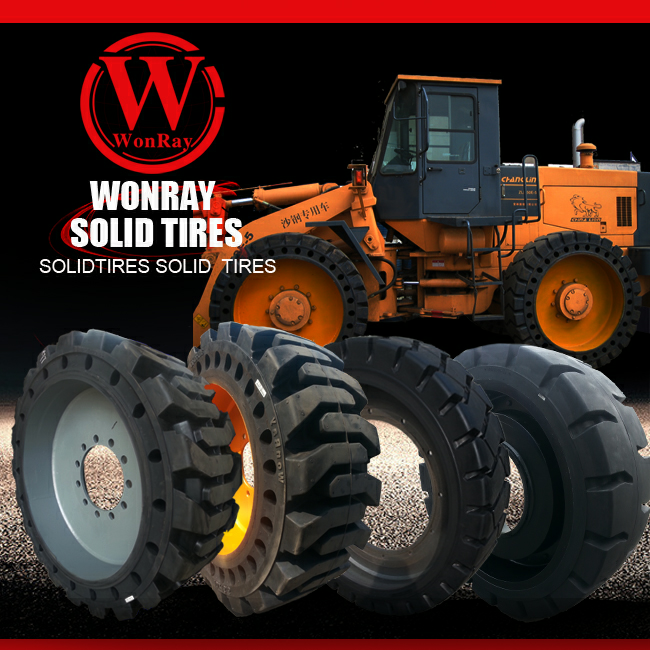
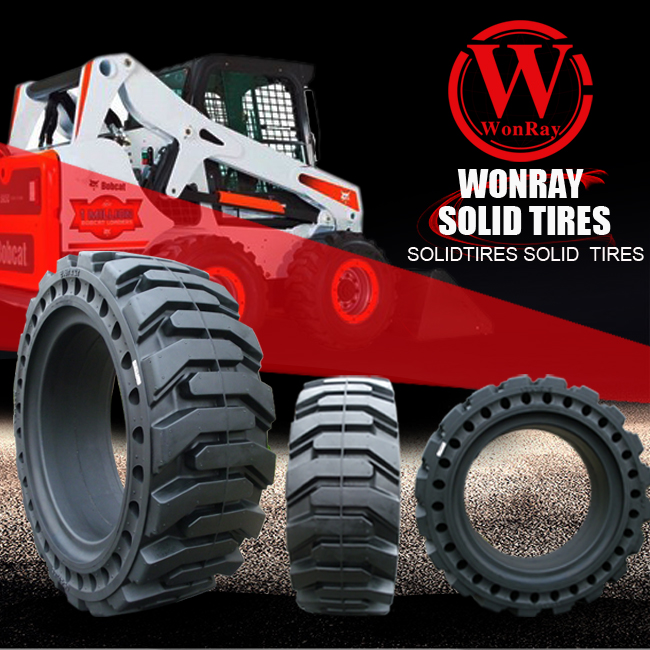
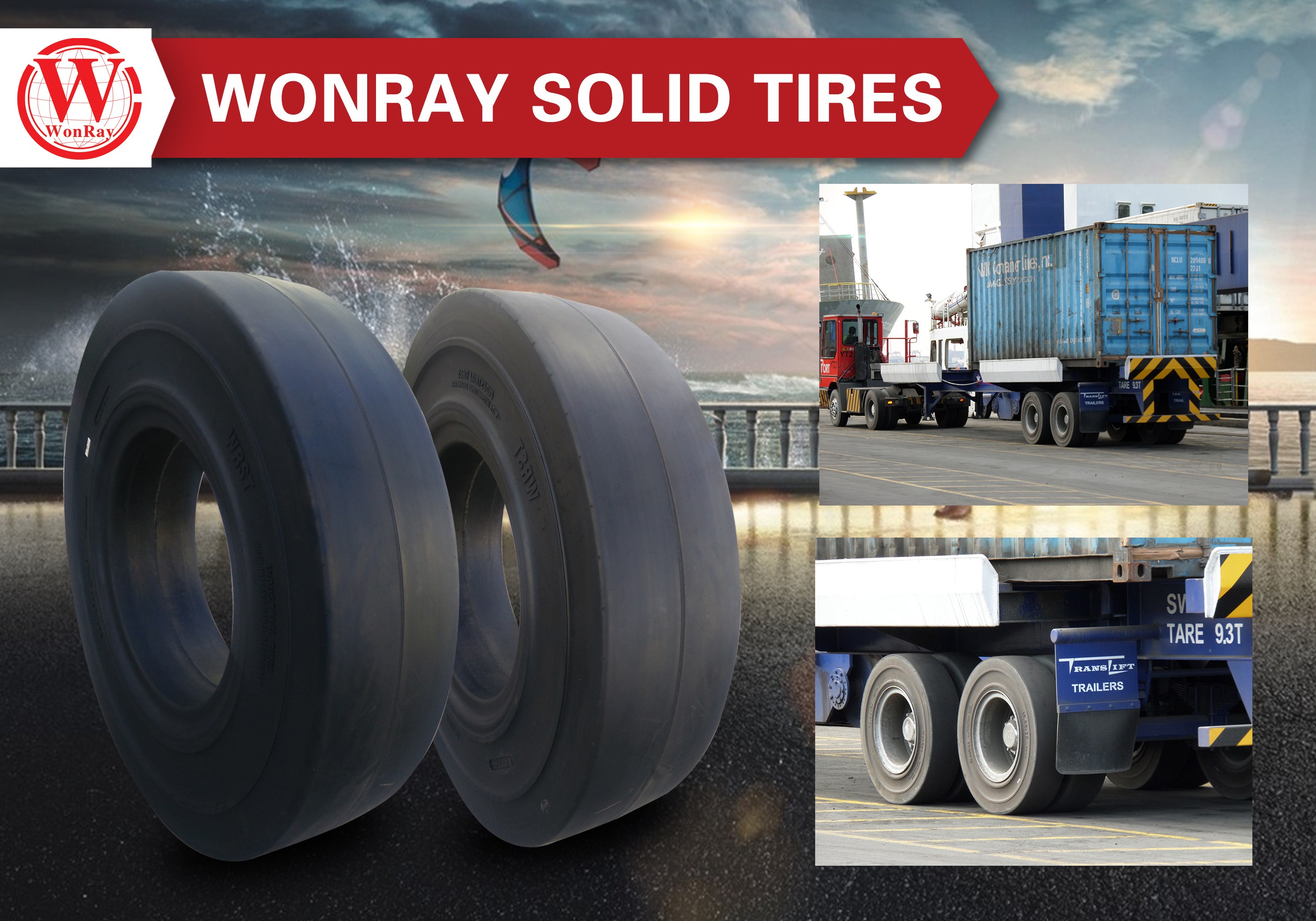
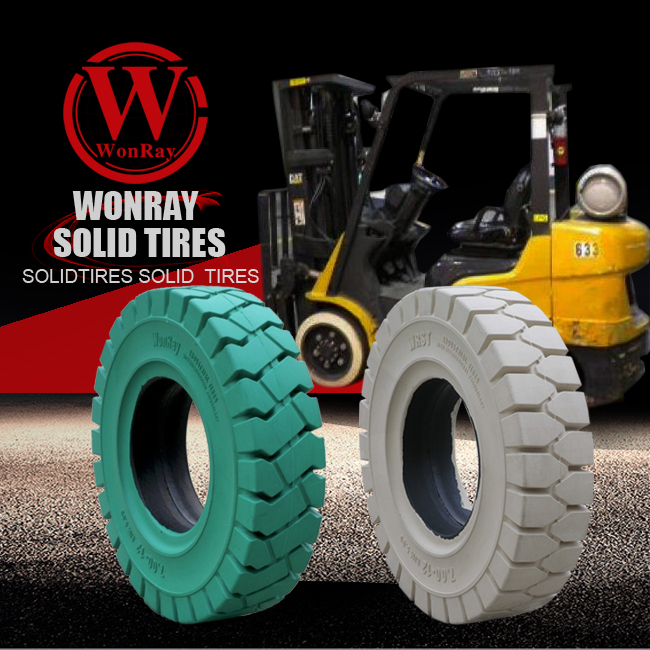
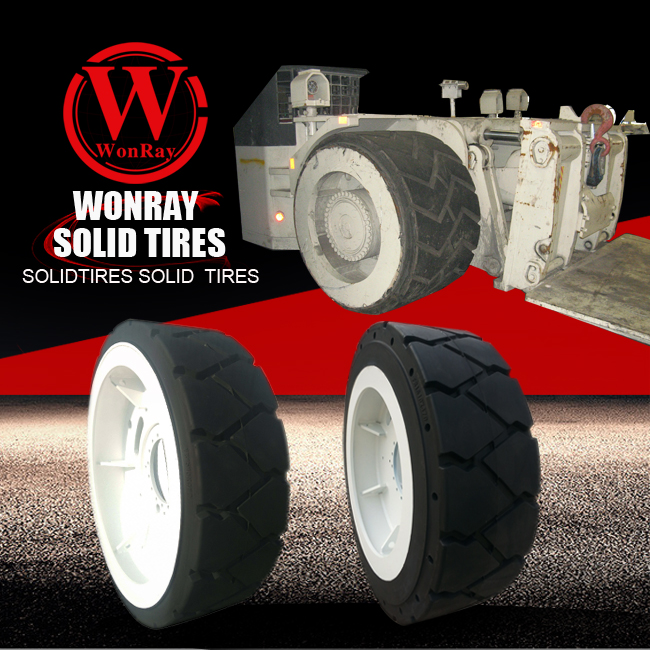
WonRay provides industrial solid tire solutions for forklifts, industrial vehicles, skid steer equipment, loaders, port vehicles, and other demanding applications. When tire life is the main concern, the most useful information is not just the tire size but the complete history: vehicle model, wheel position, load, working hours, floor or ground condition, travel pattern, and photos of several removed tires.
If tires are being replaced earlier than expected, send that information together with the current tire markings and the reason for removal. This allows the application to be evaluated around the real failure mode and helps narrow the tire solution toward longer, more consistent service rather than simply repeating the same replacement.
FAQ
Do Long-Life Solid Tires last the same amount of time in every application?
No. Service life depends heavily on load, floor, duty cycle, turning, heat, vehicle condition, and the dominant wear mechanism.
What is the most common reason solid tires wear out early?
There is no single universal cause. Overload, heat, turning scrub, abrasive floors, mechanical issues, and wrong application matching are all common contributors.
Will a harder solid tire always last longer?
No. Hardness can help with some abrasion but can change heat, traction, cushioning, and impact behavior. The compound should match the failure mode.
What information helps improve tire life?
Vehicle model, tire size, load, wheel position, working hours, route, floor condition, travel distance, operating speed, and photos of removed tires are valuable.