



High-Load Capacity Port Tires: Build the Tire Choice Around the Whole Container-Yard Cycle
High-Load Capacity Port Tires are used in port and cargo-handling environments where industrial vehicles repeatedly carry or support substantial loads across container yards, terminals, docks, and transfer areas. The phrase “high-load capacity” can make tire selection sound simple, but the maximum load number is only one part of the decision. Port vehicles may accelerate under load, brake near stacks, turn sharply in narrow lanes, cross uneven joints, and continue operating for long shifts with limited cooling time. A tire that can carry the stated weight still has to survive the way that weight moves through the vehicle.
For this reason, port tire selection should begin with the complete duty cycle. Equipment type, axle load, route length, surface condition, steering pattern, operating hours, and downtime consequences all influence the result. The most useful High-Load Capacity Port Tires are not simply the tires with the highest rating; they are the tires whose construction and operating limits match the actual combination of load and movement in the terminal.
High-Load Capacity Port Tires Must Be Matched to Dynamic Load, Not Only Static Weight
The load printed in an equipment specification is usually a starting point, not a complete description of tire stress. When a port vehicle accelerates, brakes, turns, or travels over a joint, forces move through the chassis and change the load at individual wheel positions. The same vehicle can therefore place very different demands on its tires during lifting, transport, and positioning.
A practical review should separate empty travel, loaded travel, peak load events, and repeated working load. If the vehicle spends only a small amount of time at its maximum load, the tire experiences a different duty cycle from equipment that runs near its limit for most of the shift. Load distribution across axles and wheel positions also matters, because one position can run hotter and wear faster even when the overall vehicle weight appears acceptable.
High-Load Capacity Port Tires Need a Route-Based View of the Yard
Container yards are rarely uniform. A single route may include smooth pavement, rough concrete, rail crossings, drainage channels, repaired patches, dock plates, and turning areas polished by repeated traffic. Those changes matter because the tire has to absorb impact, maintain traction, and resist abrasion without losing stability under load.
Instead of describing the facility simply as “port pavement,” divide the route into functional zones. Long straight lanes mainly create rolling and heat exposure, while stack areas may create heavy steering scrub. Gate and transfer zones introduce stopping and acceleration, and damaged sections can cause repeated impact. Mapping where tire wear occurs often reveals whether the main problem comes from load, surface, steering, or a combination of all three.
Heat Is a Load-Capacity Issue in Long Port Shifts
Heavy loads increase tire deformation, and repeated deformation generates heat. In a port application, this internal heat can accumulate because equipment may work continuously for extended periods. Ambient temperature contributes, but a tire can develop significant internal temperature even in moderate weather if load, distance, and frequency remain high.
This is one reason “more load capacity” should not be treated as permission to ignore speed or operating time. Every tire has to work within a suitable duty cycle. Long straight travel, repeated acceleration, and limited cooling periods can change the thermal condition of the tire. If one wheel position consistently runs hotter than others, load distribution, brake drag, alignment, or mechanical resistance should also be checked rather than immediately blaming the tire compound.
Steering Can Consume Tire Life Faster Than Distance
Port equipment often works in restricted areas where turning is frequent and space is limited. When a heavily loaded vehicle steers on hard pavement, the tread can experience strong lateral forces. Shoulder wear, localized abrasion, and chunking may develop even if the total travel distance is not especially high.
This is why kilometer or hour figures should be interpreted together with route geometry. A vehicle that travels a long distance in straight lines may be easier on the tread than one that performs repeated tight maneuvers in a container stack. For High-Load Capacity Port Tires, the turning pattern can be as important as the load itself when estimating service performance.
Downtime Changes the Real Value of a Port Tire
Tire cost alone does not describe the operational impact of a tire choice. In a busy terminal, an unexpected tire problem may stop a vehicle, require equipment to be moved, interrupt a handling sequence, or create delays for other machines. If tire service is difficult to arrange inside the operating area, the indirect cost can exceed the price difference between tire options.
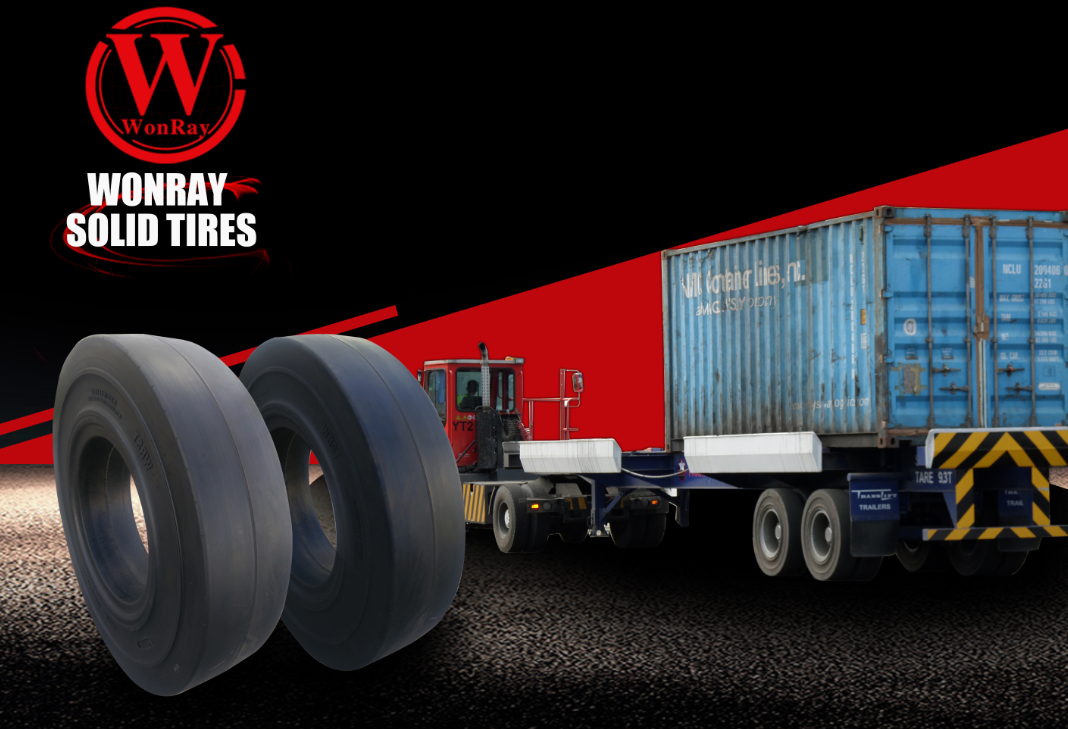
A useful comparison therefore looks at cost per working hour and interruption risk rather than initial price only. Solid tires can be attractive in puncture-prone port areas because they do not depend on air pressure, but the decision still needs to account for ride, heat, wear, and fitment. The best economic choice is the solution that supports predictable operation under the real duty cycle.
Read the Removed Tire Before Specifying the Next One
A used tire is a record of the application. Severe center wear, shoulder wear, chunking, cuts, heat-related deterioration, or unequal wear between positions each point toward different operating causes. Photographing the tire before disposal and noting its wheel position can provide useful evidence for the next selection.
For example, repeated cuts may indicate debris or sharp edges in the route. Heavy shoulder wear can point to turning scrub. One unusually worn tire may suggest alignment, load imbalance, or a mechanical issue. If every tire shows similar rapid deterioration, the overall duty cycle may exceed what the current construction handles well. This information is more valuable than simply saying that “the tire did not last.”
A Port Tire Specification Should Include More Than Size
Before selecting High-Load Capacity Port Tires, collect information that describes both the vehicle and the operation. Useful items include:
- equipment type, model, current tire size, and wheel configuration;
- empty vehicle weight, typical working load, and maximum load;
- axle loads or wheel-position loads when available;
- average travel distance and operating hours per shift;
- maximum and typical speed;
- pavement type, damaged zones, joints, and debris exposure;
- turning frequency, gradients, braking points, and loading pattern;
- current tire life, damage mode, and maintenance history.
These details make it easier to distinguish a load-capacity problem from a route, heat, or mechanical problem. They also create a practical basis for comparing different tire constructions.
Matching High-Load Capacity Port Tires With WonRay
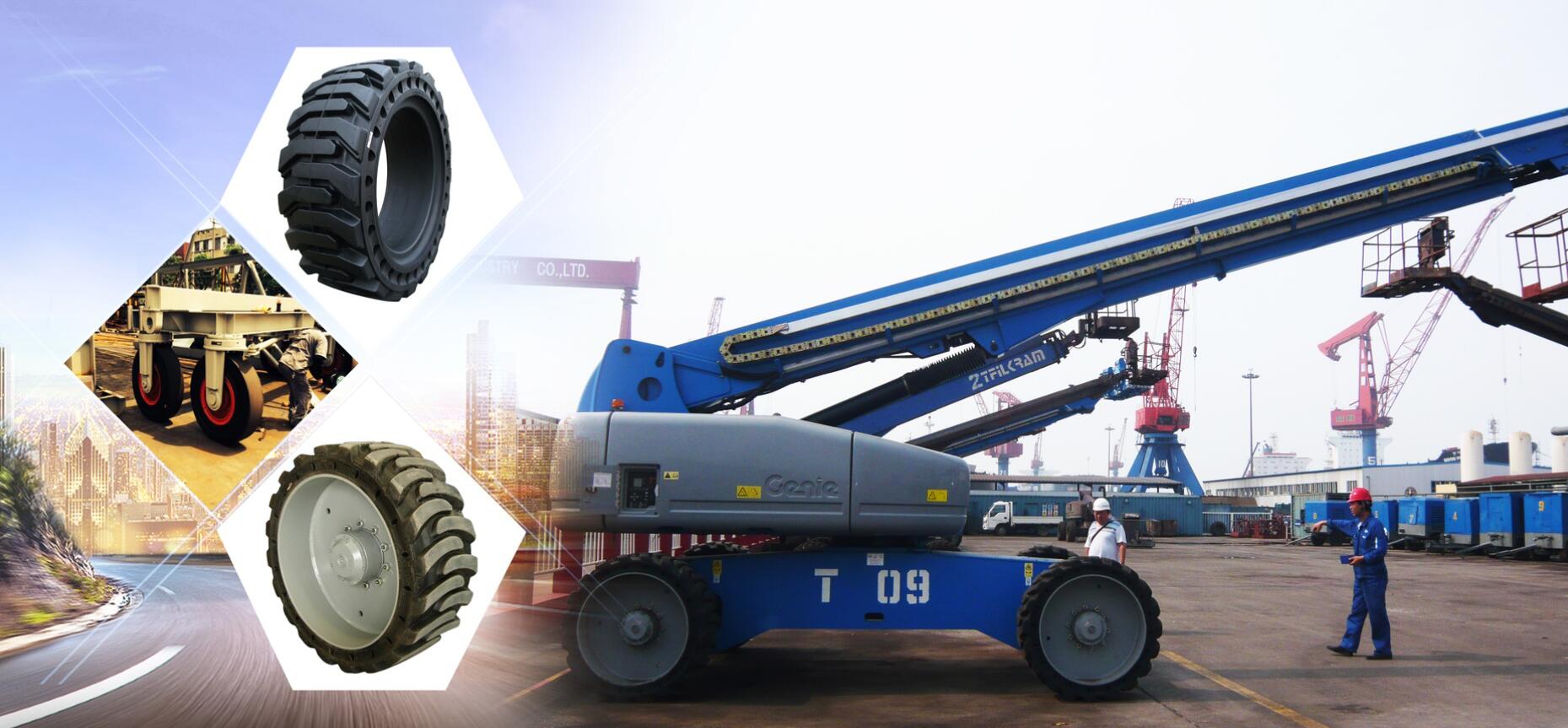
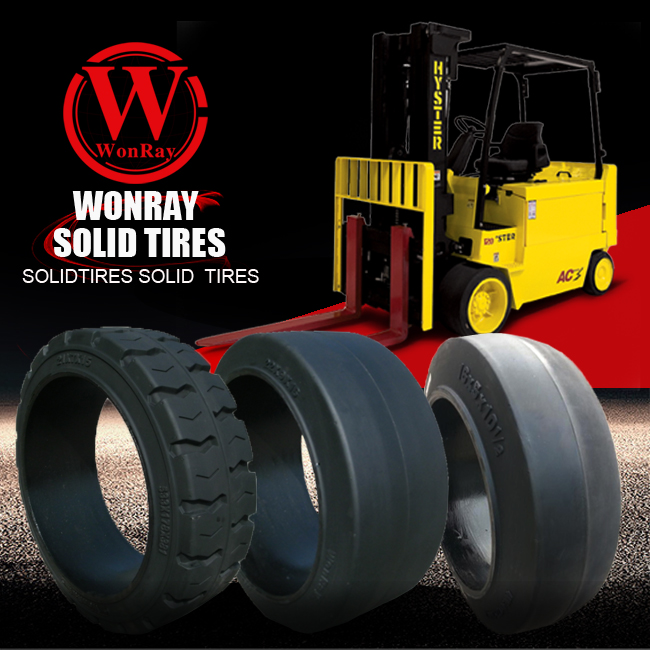
WonRay provides industrial solid tire solutions for heavy material-handling and port-related applications. When evaluating a high-load port tire, the most useful discussion begins with the actual equipment and duty cycle rather than a generic request for “the strongest tire.” Matching size, load, route, operating hours, surface, and current failure mode gives a clearer basis for selecting a suitable direction.
If your port vehicle experiences repeated punctures, rapid shoulder wear, heat buildup, chunking, or inconsistent tire life between wheel positions, share those symptoms together with the operating data. Photos of the current tire, wheel, yard surface, and equipment can also help. This information allows the tire discussion to focus on the real source of downtime and supports a more targeted quotation or product recommendation.
FAQ
Are High-Load Capacity Port Tires selected only by maximum vehicle load?
No. Maximum load is important, but axle distribution, travel distance, speed, turning frequency, surface condition, and operating hours also affect tire stress.
Why do port tires wear quickly at the shoulders?
Heavy steering on hard pavement creates lateral scrub. Tight turning in container-stack areas can therefore wear the shoulders faster than straight travel wears the center.
Are solid tires useful for port equipment?
They can be useful where punctures and air-pressure maintenance create downtime, but solid tire construction still needs to match load, heat, route, and ride requirements.
What information should be sent for a port tire recommendation?
Send equipment model, tire size, load information, operating hours, route length, speed, yard surface, turning pattern, and photos or descriptions of current tire damage.