



Corrosion-Resistant Rubber Wheels: Why the Rubber Tread Is Only Part of the Solution
Corrosion-Resistant Rubber Wheels are often requested for wet production areas, washdown zones, chemical-processing facilities, food plants, waste-handling sites, and other environments where water, cleaning agents, salts, or process chemicals can reach the wheel assembly. The wording can be misleading, however, because the rubber tread itself is usually not the only component at risk. Hubs, bearings, axles, fasteners, and mounting hardware may be more vulnerable to corrosion than the running surface.
For that reason, corrosion resistance should be treated as a system requirement rather than a single material label. A wheel can have a suitable rubber tread yet still perform poorly if the bearing seizes, the hub corrodes, or mounting hardware deteriorates. Selecting Corrosion-Resistant Rubber Wheels therefore begins with understanding the complete exposure: what substance is present, how often the wheel is exposed, whether the area is washed down, and which components remain wet after operation.
Corrosion-Resistant Rubber Wheels Start With the Actual Exposure
The word “chemical” covers too many conditions to be useful by itself. Clean water, salt water, alkaline detergent, acidic cleaner, oil, sanitizer, and process chemicals can affect wheel materials in different ways. Exposure can also range from an occasional splash to continuous operation in a wet zone. Without this information, it is difficult to judge what level of resistance is truly needed.
A useful assessment identifies the liquid or chemical by name where possible, its concentration, temperature, contact frequency, and whether the wheel is rinsed afterward. If the exact chemical is unknown, a safety data sheet or process description can provide better information than a general statement such as “the floor is corrosive.” This prevents over-specifying one part of the wheel while overlooking the component that actually fails first.
Corrosion-Resistant Rubber Wheels Are a Complete Assembly Problem
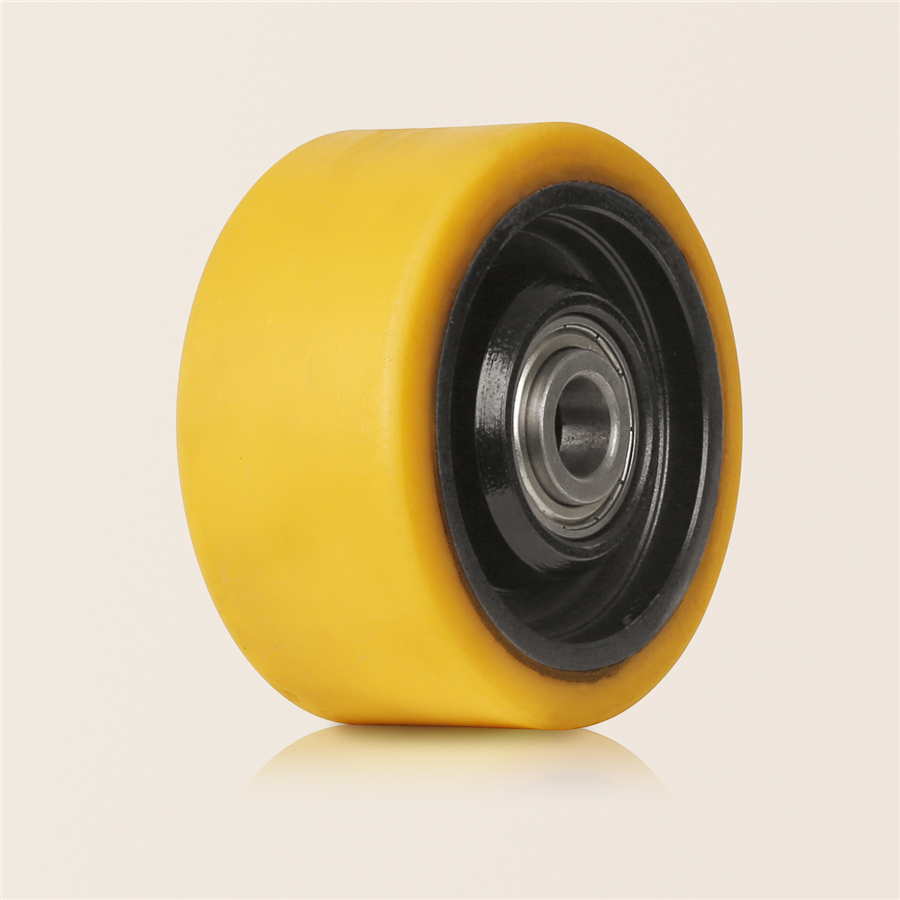
Rubber is often chosen because it provides cushioning, traction, and floor-friendly contact, but the wheel assembly includes more than the tread. The hub may be metal or polymer, the bearing may contain steel elements, and the axle or mounting hardware can remain exposed to water. If those parts are not compatible with the environment, the wheel can develop drag, noise, looseness, or complete bearing failure even when the tread still looks usable.
This is why inspection should include the entire wheel. Look for rust around the bearing, staining at the hub, swelling or cracking in the tread, damaged seals, and fasteners that are difficult to remove. A wheel that no longer rotates freely may be suffering from bearing contamination rather than tread wear. Replacing only the outer rubber does not correct that type of problem.
Washdown Changes the Duty Cycle
In many food, beverage, and process facilities, cleaning is not a rare event; it is part of the daily production cycle. Wheels may move through the area during the shift, then be exposed to water, foam, detergent, or sanitizer during washdown. After cleaning, moisture can remain around bearings and mounting points long after the floor appears dry.
The wheel therefore experiences two different duty cycles: mechanical loading during operation and chemical or moisture exposure during cleaning. Corrosion-Resistant Rubber Wheels should be evaluated for both. A component that performs well while rolling may still deteriorate during repeated cleaning if water is trapped around the bearing or hardware. Drainage, sealing, and cleaning access can be as important as the tread compound.

Do Not Confuse Chemical Resistance With Traction
A wheel material may resist a chemical without providing adequate grip on a contaminated floor. This distinction is especially important where water, oil, detergent, or process residue reduces friction. Chemical compatibility addresses whether the material degrades; traction addresses how the wheel behaves while the surface is wet or slippery.
These requirements need to be assessed separately and then combined. A production cart may need a tread that tolerates cleaning chemicals and still provides predictable movement on damp flooring. A powered industrial vehicle may need additional attention to braking and steering forces. No wheel material can compensate for a heavily contaminated floor that should be cleaned or controlled through process management.
Load Capacity Still Comes Before Material Preference
Corrosion resistance is useful only if the wheel can support the equipment. Heavy carts, racks, processing equipment, and material-handling vehicles can place high loads on relatively small wheels. If the wheel is overloaded, excessive tread deformation, bearing stress, and rolling resistance may shorten life regardless of how well the materials resist moisture.
Calculate load per wheel rather than relying only on the total capacity of the cart or machine. Uneven load distribution can place much more force on one wheel, particularly when floors are not level or the equipment has only three wheels fully loaded at certain moments. For Corrosion-Resistant Rubber Wheels, the correct load range protects both the tread and the corrosion-resistant components from unnecessary mechanical stress.
Temperature Can Change Chemical Compatibility
A material that tolerates a substance at room temperature may behave differently when the process or wash water is hot. Elevated temperature can accelerate chemical reactions, soften some polymers, and change seals or lubricants. Cold environments can also change rubber hardness and bearing behavior.
This is why temperature should be included in the exposure description. Food processing, sterilization, hot washdown, cold storage transitions, and outdoor marine environments all create different combinations of moisture and temperature. The most accurate wheel selection is based on the worst recurring condition, not only the normal room temperature.
A Failure Map Helps Identify the Weakest Component
When wheels fail repeatedly, record which part fails first. If the tread remains healthy but bearings seize, the priority is bearing protection or material compatibility. If hubs corrode while bearings remain functional, the hub material deserves attention. If the rubber softens, cracks, or swells, the tread compound may be reacting to the environment. If fasteners corrode and become impossible to service, mounting hardware is part of the problem.
This failure map prevents the phrase Corrosion-Resistant Rubber Wheels from becoming too generic. The goal is to identify the actual weak point in the assembly and choose materials around that failure mode. It also makes replacement history more useful because the facility can compare whether changes in cleaning chemicals, process fluids, or maintenance routines correspond with changes in wheel life.
Selection Information for Corrosion-Resistant Rubber Wheels
Before requesting a wheel recommendation, collect the information that describes the environment as clearly as possible:
- equipment or cart type and load per wheel;
- wheel diameter, width, hub length, bore, and mounting arrangement;
- floor material and travel route;
- liquid or chemical name, concentration, and temperature when known;
- frequency and duration of exposure;
- washdown method and cleaning frequency;
- whether the wheel remains wet between shifts;
- current failure mode: tread damage, bearing seizure, hub corrosion, or hardware corrosion.
This information makes it possible to evaluate the whole wheel rather than selecting a tread material in isolation.
Where Corrosion-Resistant Rubber Wheels Create the Most Value
Applications that combine frequent moisture with repetitive movement are the clearest candidates. Food and beverage plants, wet production zones, waste and recycling areas, some chemical-processing environments, marine-related facilities, and washdown-heavy operations can all expose wheels to conditions that ordinary assemblies may not tolerate well.
The value comes from reducing repeat failures at the component most affected by the environment. In one facility that may be the bearing; in another it may be the hub or tread. A corrosion-resistant wheel solution should therefore be specific to the process rather than marketed as a universal “waterproof” wheel.
WonRay Support for Corrosion-Resistant Rubber Wheels
WonRay can support industrial wheel and solid-tire application discussions by matching dimensional information with load, floor, exposure, and operating conditions. For Corrosion-Resistant Rubber Wheels, the most useful request includes not only wheel size but also the liquid or chemical involved and the component that currently fails. Photos of the wheel, mounting, floor, and corrosion pattern can provide important context.
If your operation is dealing with repeated bearing seizure, rusted hubs, tread deterioration, or difficult maintenance in wet areas, include that history when asking for an option or quotation. A complete description helps avoid simply replacing the same weak point with a new part. The objective is a wheel assembly that fits the equipment and is better aligned with the actual environment.
FAQ
Are Corrosion-Resistant Rubber Wheels completely corrosion-proof?
No. Corrosion resistance depends on the materials in the complete wheel assembly and the actual exposure. Bearings, hubs, axles, and fasteners may need separate consideration.
Does rubber itself corrode like steel?
Rubber does not rust like steel, but certain chemicals can cause swelling, softening, cracking, or other material changes. Compatibility still needs to be checked.
Is chemical resistance the same as wet-floor traction?
No. Chemical resistance describes material durability, while traction describes friction between the wheel and floor. Both may be important in the same application.
What information helps select a corrosion-resistant wheel?
Provide load per wheel, dimensions, mounting type, floor condition, chemical or liquid exposure, temperature, cleaning method, and the failure mode of the current wheel.