




News

High-Traction Solid Wheels: Grip Is Useful Only When the Machine Stays Predictable
High-Traction Solid Wheels sound simple: more grip should be better. In industrial work, that idea is incomplete. A wheel does not operate in a traction test by itself. It carries load, turns under torque, crosses different floors, heats up, wears, and transmits force into bearings, steering components, and the machine frame. If a wheel creates strong grip but also excessive scrub, vibration, heat, or steering resistance, the extra traction may solve one problem while creating another.

Tires for Tow Tractor: Match the Product to the Route, Load and Floor
Tires For Tow Tractor applications should be chosen around the towing route. A tow tractor may pull baggage carts at an airport, several material trailers in a factory, or a train of trolleys through a warehouse. The vehicle may be small, but the tires repeatedly transmit starting force, braking force and steering load while the total towed weight changes throughout the shift.

Oil-Resistant Industrial Tires: When Normal Tire Wear Is Actually Chemical Damage
Not every worn industrial tire is simply worn out. In facilities where hydraulic oil, lubricants, cutting fluids, grease, or petroleum-based residues reach the floor, rubber can deteriorate even when tread depth still looks acceptable. The surface may become soft, swollen, sticky, cracked, or unusually smooth. Operators may notice more slipping before anyone realizes that the tire compound itself has been affected.

What Problems Do Rubber Wheels For Food Processing Plants Need to Solve?
Rubber Wheels For Food Processing Plants work in an environment where “easy rolling” is only one requirement. Floors may be wet, regularly washed, smooth, cold, or highly visible. Carts may carry ingredients in one area and packaged products in another. Mobile racks, tables, bins, trolleys, and handling equipment may turn hundreds of times per shift. A useful rubber wheel must therefore solve several practical problems at once: maintain traction, protect the floor, control vibration, carry the load, and remain suitable for the local temperature and cleaning environment.
Can Solid Tires For AGVs Improve Route Accuracy and Uptime in Automated Material Handling?
Solid Tires For AGVs should be evaluated by what happens along the route, not by the wheel diameter alone. An automated guided vehicle may start, accelerate, travel in a straight line, turn sharply, cross a joint, slow down, dock at a workstation, unload, and repeat the same route hundreds of times. Every stage asks something different from the tire. If traction, deformation, rolling resistance, or wear changes too much, the vehicle may need more steering correction, use more energy, or lose the repeatability that automation depends on.
Industrial Wheels For Cold Storage That Stay Reliable in Low Temperatures
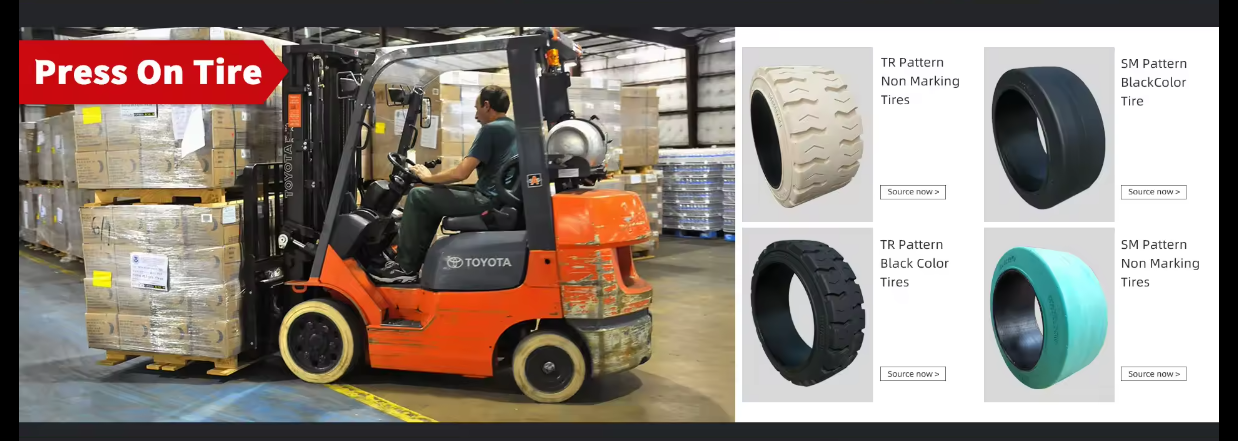
Industrial Wheels For Cold Storage are built to solve mobility problems that ordinary warehouse wheels may develop at low temperatures. Inside refrigerated rooms and frozen-storage areas, wheel materials become less flexible, lubricants thicken, condensation forms, and floors can become wet or slippery. A wheel that performs normally at room temperature may become noisy, difficult to steer, prone to cracking, or unstable under load after repeated exposure to cold.
Solid Tires for GSE: Reliable Mobility for Airport Ground Operations
Solid Tires for GSE are designed to keep airport ground support equipment moving through repetitive, time-sensitive work. Baggage carts, dollies, maintenance platforms, cargo-handling vehicles, service trailers, and other ground equipment operate close to aircraft, terminals, loading areas, and service roads. A tire failure in this environment does more than stop one vehicle. It can interrupt the movement of baggage, tools, cargo, or personnel across a tightly coordinated ground operation.
When Do Heavy Equipment Non-Pneumatic Tires Prevent the Most Downtime?
Explore how Heavy Equipment Non-Pneumatic Tires manage puncture risk, load, heat, traction, debris, and continuous operation in demanding industrial environments.
Why Are White Rubber Tires For Clean Rooms More Than a Color Choice?
Learn how White Rubber Tires For Clean Rooms support floor protection, contamination control, cleaning compatibility, low marking, stable loads, and indoor mobility.
How Should Rubber Tires For Foundries Be Matched to Heat, Metal Debris, and Heavy Loads?
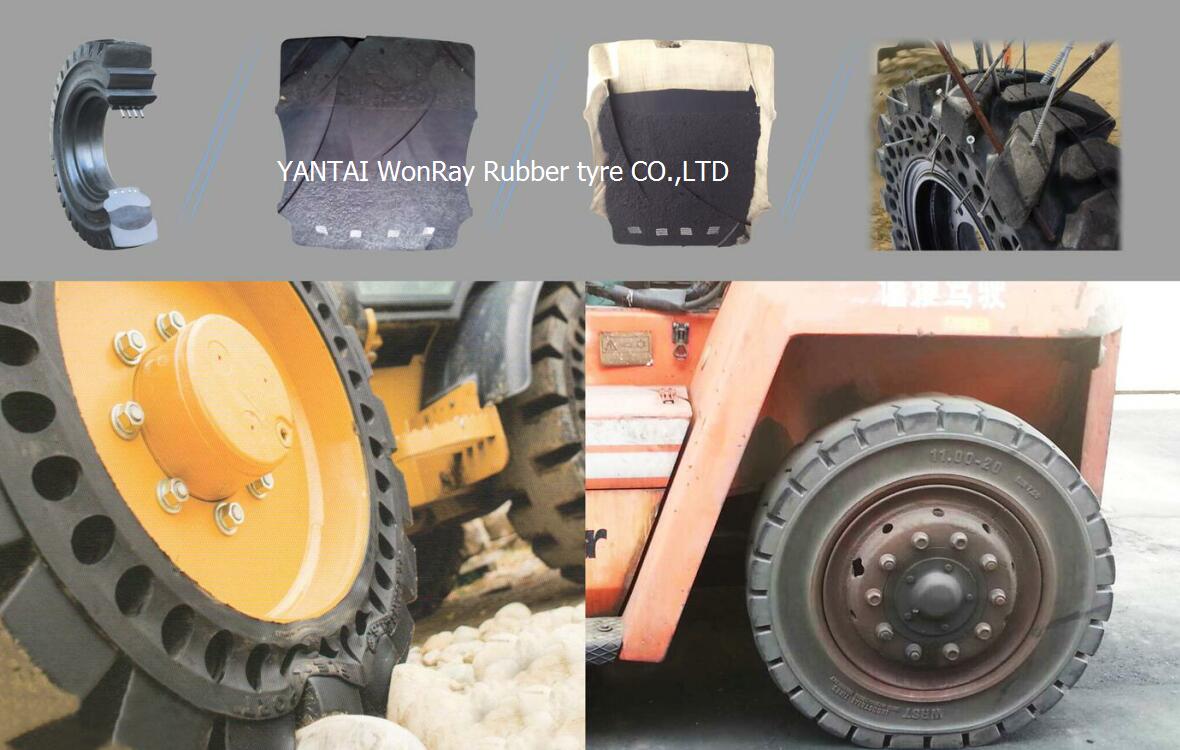
Rubber Tires For Foundries are used on forklifts, industrial carts, loaders, transfer vehicles, and other mobile equipment operating around casting, mold handling, metal preparation, finishing, and material storage. Foundry tire service can involve radiant heat, hot floor zones, sharp metal fragments, sand, dust, heavy loads, and repeated short travel cycles. A tire that fits the rim but is not matched to the exposure can harden, crack, tear, overheat, lose traction, or fail at the base.