




News

Rubber Tires For Indoor Use: Floor Protection, Traction and Wheel Matching
Rubber Tires For Indoor Use are used on forklifts, carts, tow vehicles, stackers, access platforms and other equipment that operates mainly on concrete, epoxy, tile or other finished floors. Indoor tire requirements are different from rough outdoor service because floor marking, rolling noise, tight turning, traction and clean appearance can matter as much as puncture resistance.
Anti-Wear Solid Rubber Wheels: Rubber, Contact Geometry and Wheel Life
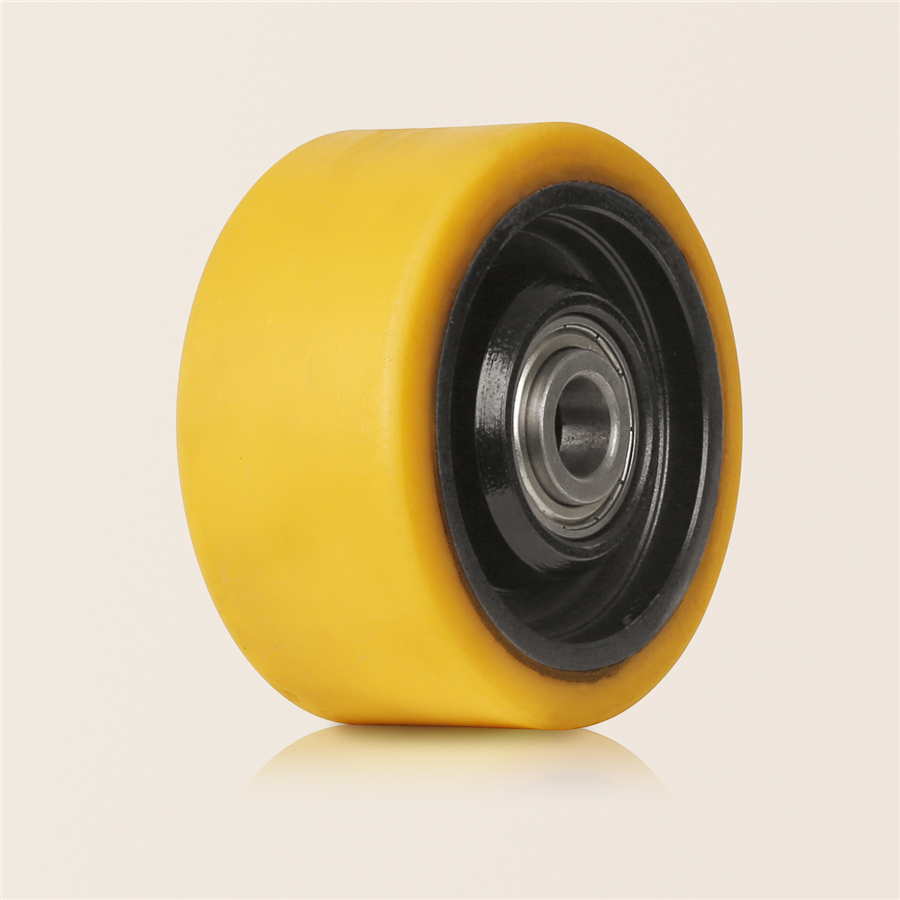
Anti-Wear Solid Rubber Wheels are used where industrial wheels repeatedly roll, turn and carry load on hard floors that gradually remove rubber. Their wear resistance comes from more than a hard tread. Rubber formulation, tread thickness, contact geometry, wheel diameter, load distribution and heat all influence how quickly the usable rubber is consumed.

Heavy-Duty Tires For Runway Operations on Ground Support Vehicles
Heavy-Duty Tires For Runway Operations are used on compatible ground support and service vehicles that move around airport runways, aprons, taxiway-side service zones and cargo areas. These are ground-vehicle tires rather than aircraft landing-gear tires. Their job is to support tow tractors, cargo handling equipment, baggage vehicles, maintenance machines and other service units working in a controlled but demanding airport environment.
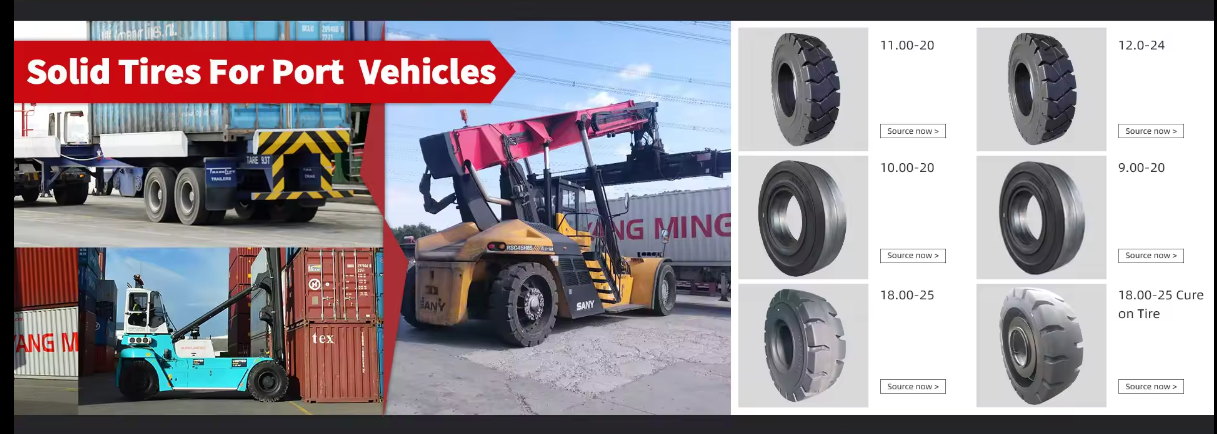
10.00-20 Solid Tires for Heavy Industrial and Port Operations
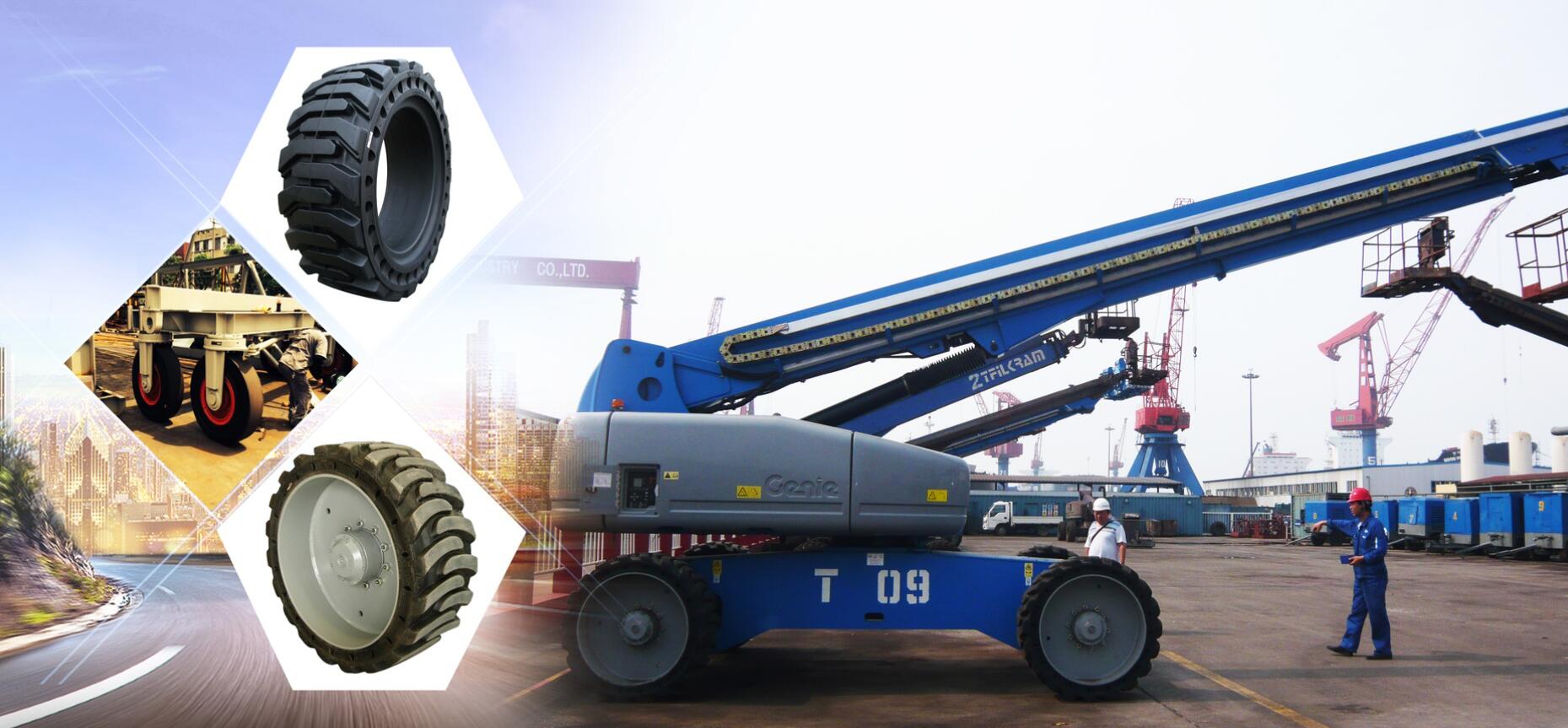
10.00-20 Solid Tires are used on compatible heavy industrial and port vehicles that require a large industrial tire size with puncture-free operation and stable load support. In these environments, tire performance is shaped by repeated heavy loads, long travel cycles, turning on abrasive surfaces and exposure to debris that can quickly damage air-filled tires.
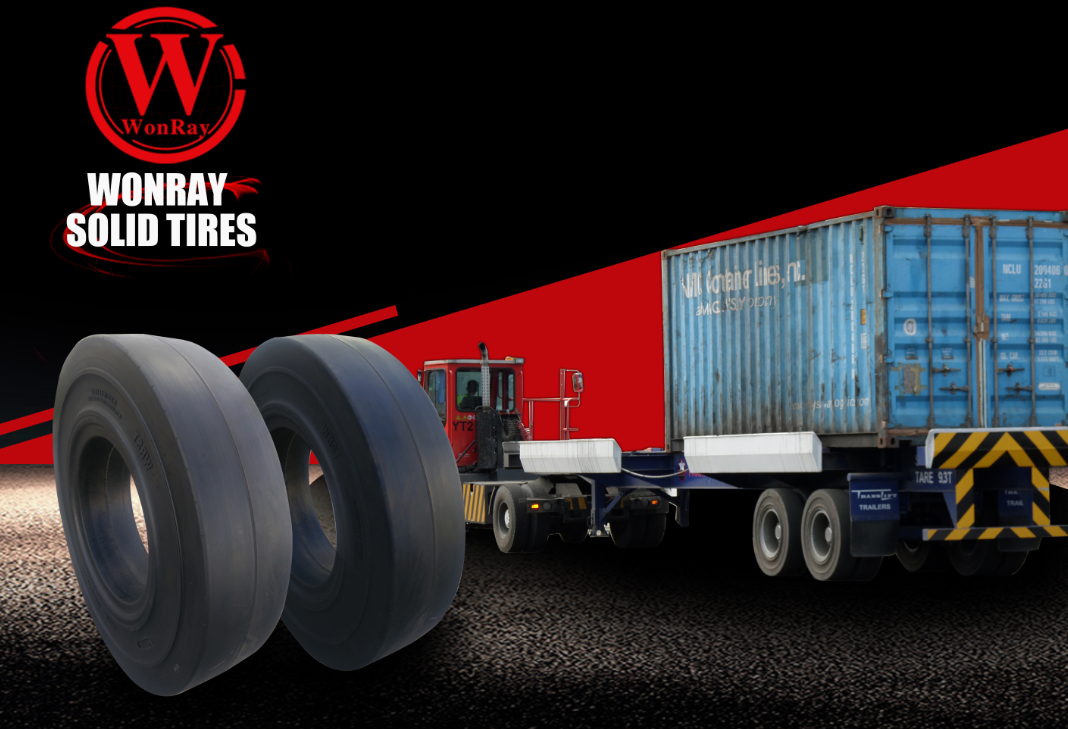
Solid Rubber Wheels For Marine Docks: Reliable Rolling Near Cargo and Water
Solid Rubber Wheels For Marine Docks are used on dockside carts, industrial trailers, service equipment and other low-speed handling systems that move cargo or tools near quays, warehouses and loading areas. The working environment combines hard pavement, heavy loads, repeated stopping, moisture, surface joints and scattered debris. A wheel that performs well in a dry indoor warehouse can therefore wear or corrode differently when it spends every day close to water and outdoor cargo traffic.

Forklift Solid Tires: Product Options for Stable Material Handling
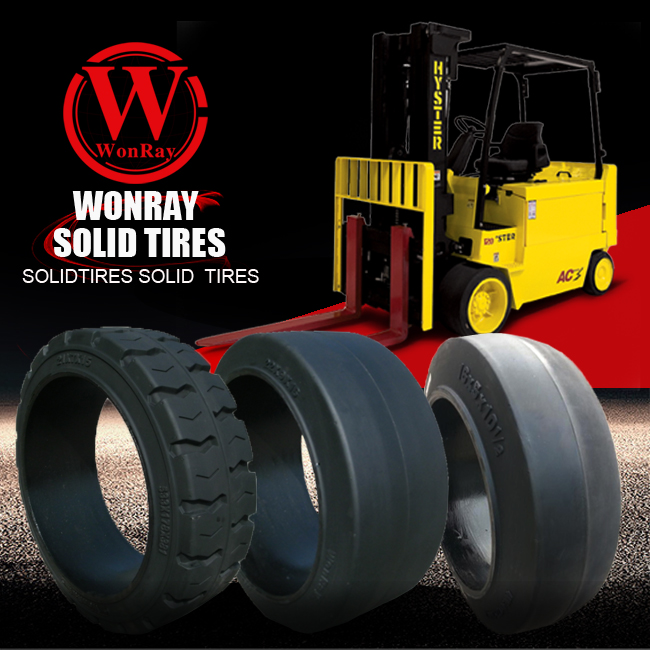
Forklift Solid Tires are designed for forklifts and lift trucks that repeatedly lift, steer, brake and travel with heavy loads in warehouses, factories, logistics centers, ports and industrial yards. Forklift Solid Tires use solid rubber instead of an air chamber, which removes the risk of sudden pressure loss and helps the vehicle maintain consistent tire dimensions during daily material handling. For operations where a flat tire can block an aisle or interrupt loading, this product structure provides a clear practical advantage.
Trailer Solid Tires: Durable Tire Products for Industrial Towing and Load Transport
Trailer Solid Tires are designed for industrial trailers, tow carts and material-transport equipment that move loads between warehouses, factories, yards, ports and production areas. Trailer Solid Tires use solid rubber rather than air pressure, so the vehicle can continue operating without the risk of sudden deflation. This product structure is particularly useful for low-speed towing routes where nails, metal fragments, pallet debris or rough floor joints are common and where a flat tire can stop an entire train of trailers.

Skid Steer Loader Solid Tires: Durable Product Designs for Rough Worksites
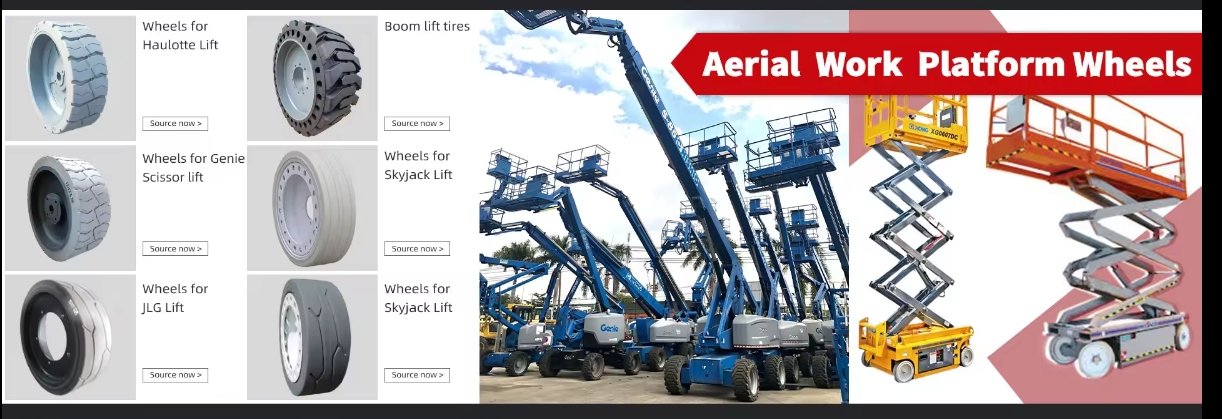
Skid Steer Loader Solid Tires are built for a machine that is unusually hard on its tires. A skid steer turns by forcing the tires on each side to travel at different speeds, which creates strong lateral scrub every time the loader pivots. At the same time, the machine may push material, carry a loaded bucket and travel across concrete, gravel, broken pavement, scrap or demolition debris. Skid Steer Loader Solid Tires use an airless rubber structure to prevent flats while providing the tread strength and dimensional stability needed for this aggressive operating pattern.

Non-Marking Rubber Forklift Tires: Floor Protection Is Only Useful When Load, Traction, and Heat Remain Controlled
Non-Marking Rubber Forklift Tires are designed for indoor material-handling environments where dark tire marks are undesirable on finished floors. Warehouses, food and beverage areas, electronics production, pharmaceutical facilities, clean manufacturing zones, retail distribution centers, and finished-goods spaces may all place greater emphasis on floor appearance and contamination control. Non-Marking Rubber Forklift Tires reduce the tendency to leave visible black streaks while still carrying the loads and steering forces expected from industrial forklift service.

Puncture-Proof Wheel Loader Tires: The Strongest Case Is a Site Where Tire Damage Is Routine, Not Accidental
Puncture-Proof Wheel Loader Tires are most valuable in sites where sharp debris is part of the normal material stream. Scrap yards, recycling plants, demolition areas, waste facilities, quarries, industrial yards, and metal-processing sites can expose wheel loaders to steel fragments, nails, wire, broken concrete, glass, and sharp rock during almost every shift. Puncture-Proof Wheel Loader Tires remove the air chamber that turns a penetration into an immediate flat, allowing the loader to continue carrying and moving material without the same dependence on pressure integrity.