

12-16.5 Solid Skid Steer Tires: Why Tire Size Is Only the Beginning of the Selection
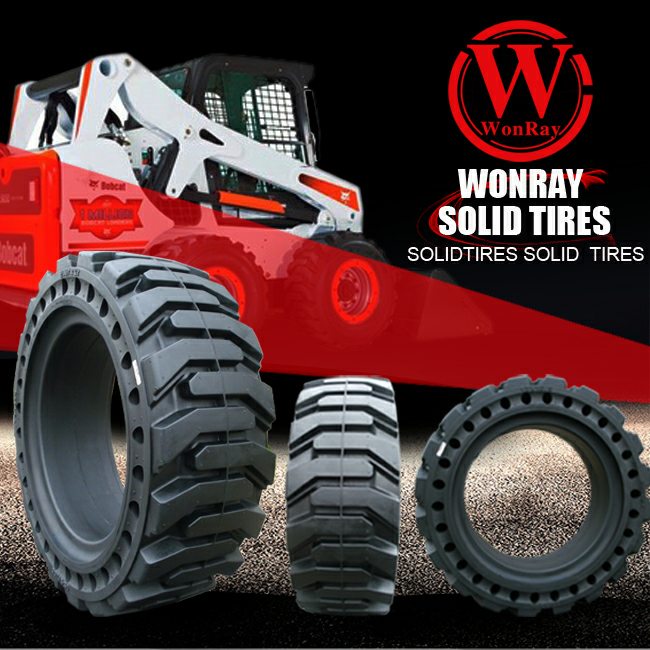
12 16.5 Solid Skid Steer Tires are used on skid steer loaders operating in environments where punctures, rough ground, repeated turning, and heavy-duty work can quickly damage conventional pneumatic tires. The 12-16.5 size is common in skid steer applications, but choosing a tire by size alone does not guarantee the right result. Two machines using the same nominal tire size may work under completely different loads, surfaces, speeds, and daily operating patterns.
For this reason, 12 16.5 Solid Skid Steer Tires should be selected around the actual job rather than treated as a simple replacement for an air-filled tire. A skid steer used on clean concrete has very different tire demands from one working around demolition debris, scrap metal, stone, or compacted construction ground.
Why Skid Steer Tires Wear Differently From Many Other Industrial Tires
Skid steer loaders turn by changing the speed or direction of the wheels on each side of the machine. Instead of steering through conventional front-wheel angles, the tires are forced to scrub across the surface during turning. This creates substantial lateral friction, especially on hard ground.
That turning method is one reason skid steer tires can experience rapid shoulder wear, tread abrasion, and surface damage even when the machine does not travel long distances. On abrasive concrete or compacted surfaces, the tire may spend much of its working life resisting turning forces rather than simply rolling forward.
This makes tread durability and overall tire construction especially important for 12 16.5 Solid Skid Steer Tires. A tire must tolerate not only the machine weight, but also the repeated twisting and scrubbing created during everyday operation.
Puncture Resistance Changes the Way the Machine Can Be Used
On many job sites, tire damage is caused less by mileage and more by what is lying on the ground. Nails, broken steel, sharp rocks, wire, construction waste, and scrap material can all create repeated puncture problems for pneumatic skid steer tires.
Solid tires remove the air chamber, which means a sharp object cannot create the same sudden pressure loss. This can be especially useful in demolition areas, recycling yards, waste handling operations, metal processing sites, and rough industrial environments where sharp debris is difficult to eliminate completely.
However, puncture resistance does not mean the tire is impossible to damage. 12 16.5 Solid Skid Steer Tires can still suffer cuts, chunking, abrasion, or excessive wear if the rubber compound and construction are poorly matched to the job.
The practical advantage is that the tire no longer depends on air pressure to keep the machine moving.
Surface Type Should Influence the Tire Choice
One of the biggest differences between skid steer applications is the ground itself.
A machine working mainly on concrete needs strong abrasion resistance because the surface continually grinds against the tread during skid turning. A skid steer operating on compacted soil or gravel needs traction and resistance to impact from uneven ground. In demolition or recycling environments, protection against cuts and chunking becomes more important.
This means 12 16.5 Solid Skid Steer Tires should not be selected only according to tread depth. The tread pattern, rubber hardness, internal construction, working load, and surface type all influence how the tire performs.
A deeper tread may improve traction in some conditions, but it does not automatically provide longer life on abrasive concrete. Likewise, an extremely hard compound may resist wear but transmit more vibration when the machine works over uneven ground.
Solid Tires Also Change Ride Characteristics
Replacing pneumatic tires with solid tires changes how the skid steer responds to bumps, holes, joints, and rough surfaces. Pneumatic tires use compressed air and sidewall movement to absorb part of the impact. Solid tires rely on rubber structure and, depending on design, internal cushioning features.
The result is usually a firmer ride.
For machines working on hard, relatively even surfaces, this may be acceptable because puncture resistance and reduced tire maintenance are more important. On very rough terrain, however, impact and vibration can become more noticeable.
This does not make solid tires unsuitable for rough work, but it does mean the operating environment should be understood before making the change. The best tire is the one that solves the dominant problem without creating unnecessary disadvantages elsewhere.
Watch the Shoulder Area First
Skid steer tire wear often begins to show clearly at the shoulders because turning creates strong side forces at the tread edges. If shoulder wear becomes severe much faster than the center of the tire, frequent skid turns on abrasive ground may be one of the main causes.
Chunking around the shoulder can also indicate a combination of sharp debris, high load, aggressive turning, and unsuitable surface conditions. Examining where the damage begins can be more useful than simply measuring remaining tread depth.
For 12 16.5 Solid Skid Steer Tires, regular visual inspection can therefore help identify whether the problem comes from normal wear, operating behavior, or the working environment.
Machine Load Changes Tire Stress
Skid steer loaders are frequently used with buckets, forks, grapples, sweepers, and other attachments. Different attachments change machine weight, load distribution, and the way forces pass through the tires.
A skid steer lifting dense material may place significantly more stress on the front tires than the same machine traveling empty. Repeated loading cycles can increase rubber deformation and heat generation, especially when combined with frequent turning.
This is why size matching is only the starting point. The actual application of the machine needs to be considered as well.
Before choosing 12 16.5 Solid Skid Steer Tires, it is useful to know what attachments are commonly used, what materials are handled, how heavy the typical load is, and whether the machine spends most of its time traveling or loading.
Long Work Cycles Can Increase Heat
Solid tires generate heat as the rubber repeatedly deforms under load. Long shifts, high working loads, frequent turning, and continuous travel can all increase internal temperature.
This is especially relevant for skid steers because the tires are exposed to both vertical load and strong lateral forces during turning. Even if the surrounding temperature is moderate, the tire itself can build heat through repeated mechanical stress.
A machine working intermittently may give the tire more time to recover than one running continuously through a long shift. Operating time therefore needs to be considered together with load and surface condition.
When 12 16.5 Solid Skid Steer Tires Make the Most Sense
Solid tires are particularly useful where punctures are a recurring problem and the cost of repeated tire interruption is high. Demolition sites, recycling operations, industrial yards, scrap handling, waste facilities, and construction zones are typical examples where air-filled tires may be exposed to constant damage.
They can also be practical where tire pressure maintenance is inconvenient or where machines are expected to work continuously in demanding environments.
However, if the machine works mainly on very soft ground or requires maximum cushioning over highly uneven terrain, other tire constructions may provide different benefits. The decision should be based on the operating problem that matters most.
Conclusion
12 16.5 Solid Skid Steer Tires are not simply airless versions of conventional skid steer tires. Their value comes from combining puncture resistance, load support, wear resistance, and dependable operation in applications where sharp debris and repeated skid turning create severe tire stress.
The right tire should be selected according to surface type, machine load, attachment use, operating hours, turning frequency, and the kind of tire damage already occurring. When those factors are considered together, a 12-16.5 solid tire can be matched much more accurately to real skid steer working conditions.
FAQ
1. What are 12 16.5 Solid Skid Steer Tires used for?
They are used on skid steer loaders in construction, recycling, industrial yards, demolition, waste handling, and other demanding environments.
2. Can solid skid steer tires still be damaged?
Yes. They cannot lose air from punctures, but the rubber can still experience cuts, chunking, abrasion, and wear.
3. Why do skid steer tires wear heavily on the shoulders?
Skid steer turning creates strong sideways friction between the tire and ground, which often increases shoulder wear.
4. What should be checked before choosing 12 16.5 Solid Skid Steer Tires?
Check tire size, wheel compatibility, machine load, attachment type, ground condition, daily operating hours, turning frequency, and the current tire wear pattern.