

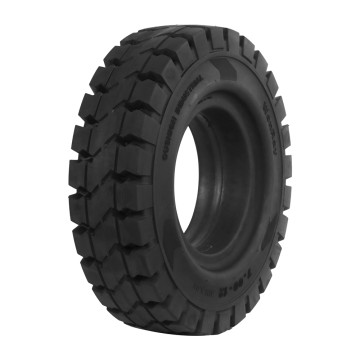
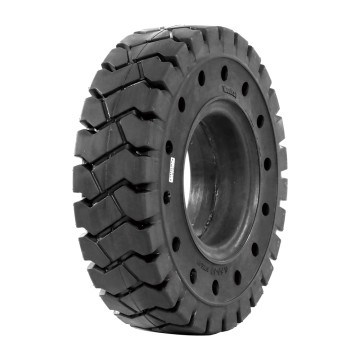

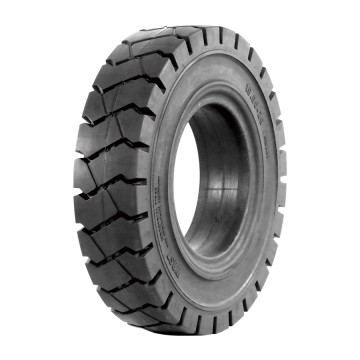

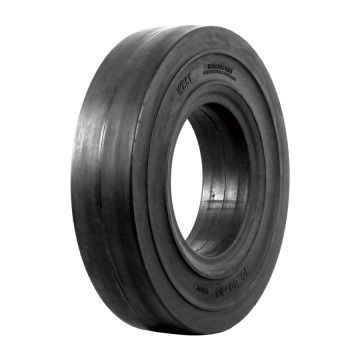
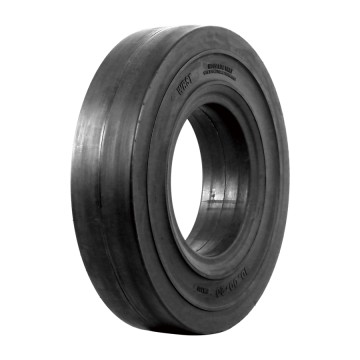
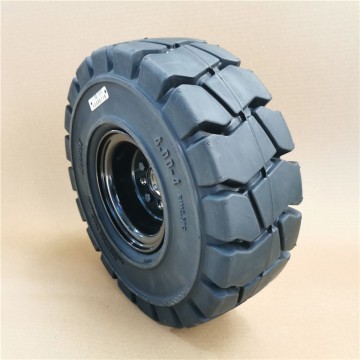
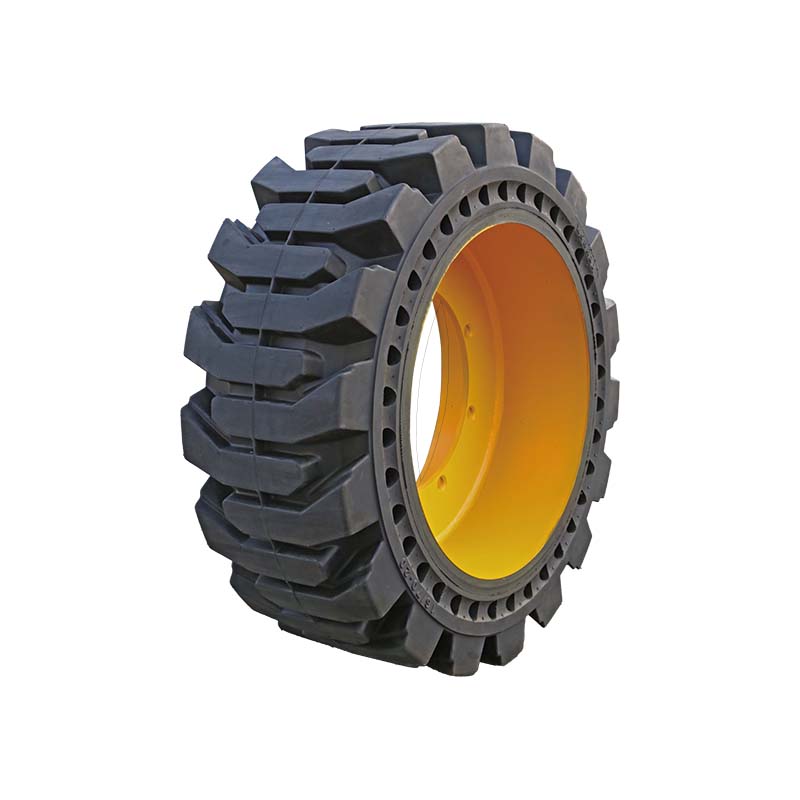


China Mold-On Solid Tires: High-Quality Cured-On Solid Tire Suppliers and Factory Solutions for Industrial Applications
Products Description


- 1. A single type of rubber is formed, and the process is simple, which avoids the bonding problem caused by multiple rubber forming of traditional solid tires, and does not cause the rubber layers to separate when the tire is in use.
- 2. Due to the good thermal conductivity of the steel ring, the curing time is shorter than that of the traditional solid tire, the energy consumption is low, and the production efficiency is high, which meets the current low-carbon requirements;
- 3. The steel ring can be reused to reduce the cost of use;
- 4. The deformation of the tire is small, and the stability and safety are good;
- 5. The tire rubber layer is relatively thin, and the heat dissipation is better, which solves the problems of traditional solid tires such as flat tires;
- 6. Since the rubber is directly bonded to the steel ring, the hidden danger of the slip ring is eliminated;
- 7. Easy to install and use, no need to press-fit rims or hubs;
- 8. Large Load capacity, the load capacity of the bonded solid tire is more than 10% higher than that of the pneumatic solid tire.

Products Specifications
| No. | Size of Tire | With Hole (Yes/No) | Pattern No. | Outside Diameter | Section Width | Net Weight (Kg) | Max Load (Kg) | Max Load (Kg) |
|---|---|---|---|---|---|---|---|---|
| Other Industrial Vehicles | Other Industrial Vehicles | |||||||
| ±5mm | ±5mm | ±1.5%kg | 10Km/h | 16Km/h | ||||
| 1 | FB10x16.5 (30x10-16) | Yes | R708/R711 | 788 | 250 | 116 | 3955 | 3700 |
| 2 | FB12x16.5 (33x12-20) | Yes | R708 | 840 | 275 | 136 | 4810 | 4500 |
| 3 | FB16/70-20 | Yes | R708 | 1060 | 400 | 312 | 9445 | 8830 |
| 4 | FB16/70-20(14-17.5) Economy | Yes | R708 | 940 | 330 | 216 | 7080 | 6620 |
| 6 | FB38.5x14-20(14x17.5,385/65D-19.5) | Yes | R708 | 966 | 350 | 242 | 7560 | 7070 |
| 7 | FB385/65-24(385/65-22.5) | Yes | R708 | 1062 | 356 | 290 | 7905 | 7390 |
| 8 | FB445/65-24(445/65-22.5) | Yes | R708 | 1152 | 428 | 394 | 10735 | 10040 |
| 9 | FB14.00-24 | No | R701 | 1340 | 328 | 445 | 11445 | 10700 |
| 10 | FB17.5-25 | Yes | R711 | 1368 | 458 | 631 | 14330 | 13400 |
| 11 | FB18.00-25 | Yes | R711 | 1620 | 500 | 960 | 20100 | 18795 |
| 12 | FB20.5-25(57x20) | No | R709 | 1455 | 500 | 765/950 | 18685 | 17470 |
| 13 | FB23.5-25 | Yes | R709/R711 | 1620 | 580/570 | 1040 | 25025 | 23400 |
| 14 | FB26.5-25 | Yes | R709 | 1736 | 650 | 1395 | 31290 | 29260 |
| 15 | FB29.5-25 | Yes | R709 | 1840 | 730 | 1780 | 36780 | 34390 |
| 16 | FB29.5-29 | No | R709 | 1830 | 746 | 1944 | 36345 | 33985 |
| 17 | 1510x470 | FB | R715 | 1516 | 470 | 16120 | 17195 | 16070 |
| 18 | FB300x80 | FB | R717 | 300 | 80 | 7.2 | 495 | 465 |
| 19 | FB300x100 | FB | R701 | 300 | 100 | 11 | 655 | 615 |
| 20 | FB305x125 | FB | R717 | 305 | 125 | 13.5 | 860 | 805 |
| 21 | FB325x110 | FB | R706 | 325 | 110 | 10.7 | 795 | 745 |
| 22 | FB330x120 | FB | R706 | 330 | 120 | 33.2 | 845 | 790 |
| 23 | FB400x200 | FB | R700 | 400 | 200 | 55 | 1875 | 1755 |
| 24 | FB530x152 | FB | R700 | 530 | 152 | 42.9 | 1790 | 1675 |
| 25 | FB570x160 | FB | R701 | 582 | 157 | 43 | 2005 | 1875 |
| 26 | FB254x102 | FB | R706 | 254 | 102 | 5.8 | 590 | 550 |
| 27 | FB230x100 | FB | R717 | 230 | 100 | 9.6 | 530 | 495 |
| 28 | FB18x10 | FB | R714 | 457 | 254 | 61.5 | 2885 | 2695 |
| 29 | FB28x10 | FB | R700 | 711 | 254 | 126 | 4295 | 4015 |
| 5 | FB40x16x30 | No | R700 | 1016 | 406 | 453 | 10360 | 9690 |
Application


Frequently Asked Questions
A cured on (or mold-on) solid tire is a technical combination of traditional pneumatic solid tires and press on band solid tires. It integrates the benefits of both designs while eliminating typical bonding and separation issues by molding the rubber directly to the steel ring.
These tires are widely used in industrial machinery, most notably aerial work platforms and scissor lifts (such as Genie, JLG, Skyjack, and OTR). They are also utilized in underground mining machinery and heavy-duty support trucks.
Since they are formed using a single type of rubber in a simplified manufacturing process, they avoid the bonding problems associated with the multiple rubber layers found in traditional solid tires. This eliminates layer separation during operation.
Yes, the steel rings can be reused multiple times. This feature significantly lowers long-term operational costs and contributes to eco-friendly, low-carbon industrial practices.
The rubber layer of cured on solid tires is relatively thin, and the steel ring offers high thermal conductivity. This combination allows for superior heat dissipation, reducing the risk of flat tires caused by heat buildup.
Cured on solid tires offer a highly stable structure that increases overall load capacity. The load capacity of these bonded solid tires is more than 10% higher than that of standard pneumatic solid tires.