Picking out the right Solid Forklift Tires isn’t just about comparing prices, tread designs, or flashy product pictures. In a busy warehouse, those tires are constantly pounding against concrete, dealing with oil, dust, and sharp turns. Make a bad choice, and suddenly you’re dealing with more vibrations, more downtime, or even compromised handling. That’s where experience really counts.
According to Fortune Business Insights, the global industrial tires market was valued at around USD 5.22 billion in 2023, and it’s expected to keep growing through 2030 — mainly because of ongoing demand in logistics and material handling. Now, the report doesn’t specifically break out forklift tires, so you gotta interpret the numbers a bit carefully. Still, the overall trend is clear: forklift fleets are running longer shifts, especially at distribution centers and manufacturing plants. OSHA emphasizes that forklift operators and their bosses need to keep an eye on things that can affect stability and safety. Picking the right tires definitely helps with that, but it’s not a substitute for good training or regular maintenance.
Matt Hays from Trelleborg Wheel Systems, a guy who knows his stuff about material handling, once said, “The right tire strikes a balance between safety, uptime, and operating costs.” And honestly, that’s a pretty practical way to look at it. For example, a rugged tire might be perfect for rough loading yards, while a non-marking type could be better for indoors, where floors need to stay spotless. Forklift Tires Solid products can look pretty similar at a glance, but their materials, heat resistance, cushioning, and load ratings can vary a lot. This guide digs into those details, based on facts and real-world info. The truth is, no single tire works best everywhere. That’s a bit of an uncomfortable reality. So, before you pick solid forklift tires, be sure to think about axle loads, the type of floor, shift length, how often you’re turning, and how easy it is to swap them out.
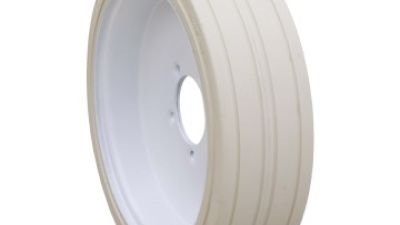
Solid Forklift Tiresare Non-Pneumatic Tires made from resilient rubber compounds. They contain no air chamber, so punctures are not a daily concern. In warehouse inspections, their solid sidewalls remain stable around pallets, ramps, and dock plates. They also resist sharp debris better than ordinary pneumatic tires. That difference matters in recycling yards and manufacturing floors.
Pneumatic tires absorb impacts through compressed air. Solid Forklift Tires depend on rubber layers and their internal design instead. They usually offer strong load support and predictable handling, even when pressure checks are forgotten. However, they can transmit more vibration through the seat and frame. On uneven concrete, the ride may feel noticeably harder. Heat buildup can also become a concern during long, fast shifts.
Choosing the right tire requires more than checking size. Review the forklift’s load chart, wheel dimensions, operating surface, and daily travel distance. A tire that works well indoors may wear faster on rough outdoor ground. Check the compound, tread pattern, mounting method, and heat rating with a qualified technician. I have seen operators focus only on puncture resistance, then overlook vibration and floor damage. That choice was durable, but not always practical. The best selection balances safety, service life, operator comfort, and maintenance conditions.
Forklift Solid Tires suit demanding workplaces where punctures, sharp debris, and frequent lifting create daily risks. They perform well in warehouses, factories, recycling areas, and loading docks with firm concrete floors. A forklift carrying steel coils or dense pallet loads benefits from their stable footprint. They also reduce downtime when nails or broken pallets appear near work aisles. Check the tire size, rated load, operating speed, and forklift axle capacity before choosing.
Indoor distribution centers are often the strongest match. Smooth floors allow solid tires to roll steadily between narrow racks and dock doors. Their maintenance needs are low, which helps fleets operating across several shifts. Cold storage can also be suitable, but the compound must remain reliable at low temperatures. Floor marking matters too. Dark tires may leave traces on polished surfaces, while non-marking options can protect clean production areas.
Construction yards and rough outdoor routes need more caution. Solid tires resist punctures, but they transmit more vibration than pneumatic tires. Repeated travel over broken concrete may stress the operator, load, and forklift. A perfect choice? Not always. I would inspect the route, turning frequency, floor condition, and average load before installation. Short trials reveal problems that specifications may miss. A tire that feels stable under one pallet may feel harsh during a full shift.
Choosing solid forklift tires requires more than checking load capacity. Compare the tire type with your forklift’s duty cycle, wheel design, and floor conditions. Press-on tires suit indoor operations with smooth concrete and frequent turning. Molded-on tires offer strong cushioning and can handle mixed indoor and outdoor work. Polyurethane tires may reduce rolling resistance, but they need careful evaluation under heavy loads and heat.
Tread patterns also change daily performance. Ribbed treads support steady travel on clean floors. Block treads improve traction on dusty or uneven surfaces. Smooth treads can protect sensitive floors, yet they may slip when water or oil is present.
Material matters too. Natural and synthetic rubber compounds balance grip, wear resistance, and comfort differently. Ask for hardness, heat limits, abrasion results, and load data. Do not trust appearance alone.
Tips: Inspect the working floor first. Measure turning areas, ramps, debris, and moisture. Compare two tire samples during a short trial. Record heat buildup, steering effort, vibration, and wear after each shift. A softer tire may feel better, but it can wear faster. A harder tire may last longer, but it can transmit more shock. There is no universal winner. In my experience, tire selection often improves after questioning the original assumptions. Check maintenance records, too. They may reveal that the real problem is overloading, incorrect inflation history, or poor floor cleaning rather than tire quality.
Selecting the correct solid forklift tire starts with accurate measurements. Check the tire sidewall, rim diameter, overall width, and hub fit before comparing products. For example, 700 12 Solid Forklift Tires commonly indicate a 7.00-12 size, but notation can vary. Measure carefully. Check the rim.
Load capacity deserves equal attention. Find the forklift’s rated capacity plate, then consider the actual load, attachment weight, lifting height, and load position. A bulky load can create greater tire stress than its scale weight suggests. The tire’s rated capacity must support the axle load, not only the machine’s average weight.
Divide the maximum loaded axle weight between the tires, then allow a practical safety margin. Never rely on a tire size alone.
Floor conditions also influence the selection. Smooth warehouse concrete may suit a different compound than rough yards or areas with metal debris. Heat, long travel distances, and frequent turning can increase wear.
Inspect the tread and sidewalls regularly. I used to treat tire replacement as a simple size match, but that approach misses operating conditions. Recheck your assumptions.
Compare technical load tables, rim specifications, and operating temperatures from reliable documentation. If the figures conflict, pause and obtain professional verification before installation.
China Best Solid Forklift Tires: How to Choose?
What Quality Standards Should Chinese Tire Suppliers Meet?
Choosing solid forklift tires requires more than checking price or tread appearance. A reliable Chinese supplier should operate under a documented quality system, such as ISO 9001, and provide traceable production records. Ask for test data covering load capacity, abrasion, hardness, heat resistance, and dimensional accuracy. These figures should match the tire size and forklift application.
The rubber compound must remain stable under heavy warehouse loads and repeated turning. Inspect sample tires for even molding, clean sidewalls, and firm bead areas. A supplier should explain its raw material controls and curing process clearly. Independent laboratory reports add confidence, especially for export orders. However, paperwork alone is not enough. Factory audits and sample testing still matter.
Tips: Request two or three samples before a bulk order. Measure diameter, width, and hardness with simple tools. Test performance on your actual floor surface. Check batch numbers, inspection dates, packaging, and warranty terms. Confirm that products meet the safety and import requirements of your destination market. No supplier is perfect. I would still question vague test reports, even when the factory looks professional. Small defects can become costly downtime.
China Best Solid Forklift Tires How to Choose?
Choosing Solid Rubber Forklift Tires from China requires more than comparing unit prices. Ask suppliers for load ratings, rubber compound details, rim compatibility, and production inspection records. A reliable supplier should explain how the tires perform on concrete floors, uneven yards, and long daily shifts. Request samples when possible. Check tread depth, sidewall markings, hardness, and visible molding defects before placing a large order.
Pricing should include more than the factory quotation. Compare shipping, packaging, replacement costs, and expected service life. The cheapest quote looked convincing, but it may hide weaker rubber or limited technical support. Calculate cost per operating hour instead of cost per tire. That matters. Ask whether the supplier can provide stable production quality across repeat orders.
Warranty terms need clear language. Confirm the coverage period, acceptable wear limits, claim documents, and response time. A dependable supplier should provide inspection guidance and practical solutions, not vague promises. After-sales support may include installation advice, tire selection help, and replacement procedures. Test the communication before purchase. Send technical questions and measure how precisely the supplier responds. Slow replies can become serious problems during equipment downtime. I would also keep photographs, inspection reports, and shipment records. Small gaps in documentation can create disputes later. Be careful.
| Evaluation Dimension | What to Check | Practical Benchmark | Why It Matters | Suggested Weight |
|---|---|---|---|---|
| Supplier Experience | Years producing solid forklift tires, export experience, and references from comparable applications | At least 5 years of relevant production experience and verifiable customer references | Experienced suppliers usually have more consistent tooling, compound control, and technical support | 15% |
| Product Construction | Rubber compound, steel or reinforced base, tread design, heat resistance, and dimensional accuracy | Uniform tread, no visible cracks or voids, accurate dimensions, and a compound matched to the operating environment | Construction quality affects stability, wear life, heat buildup, and resistance to impact | 15% |
| Load and Application Fit | Forklift capacity, tire size, operating surface, duty cycle, speed, temperature, and turning frequency | Supplier provides a written recommendation based on the forklift model and actual working conditions | A tire suitable for smooth indoor floors may not perform well on rough yards or high-temperature applications | 15% |
| Quality Control | Incoming material inspection, production controls, final inspection, batch traceability, and test documentation | Documented inspection process with batch records and measurable dimensional and visual checks | Consistent quality reduces premature failures and makes replacement planning easier | 15% |
| Certification and Compliance | Applicable quality certificates, material declarations, packaging requirements, and export documentation | Valid certificates can be verified and documents match the destination-market requirements | Proper documentation supports procurement approval, customs clearance, and internal compliance | 10% |
| Price and Total Cost | Unit price, tooling charges, packaging, freight, taxes, installation, and expected service life | Compare landed cost and cost per operating hour instead of unit price alone | A lower purchase price can become more expensive if wear life is shorter or downtime is higher | 15% |
| Warranty Terms | Warranty period, covered defects, exclusions, claim evidence, replacement policy, and freight responsibility | Terms are written clearly and distinguish manufacturing defects from normal wear, misuse, or unsuitable operating conditions | Clear terms reduce disputes and provide a realistic remedy if a manufacturing problem occurs | 7% |
| After-Sales Support | Technical response time, installation guidance, complaint handling, spare availability, and replacement support | Initial response within 1 business day and a defined process for investigation and corrective action | Fast support helps reduce forklift downtime and prevents repeated installation or application errors | 8% |
| Cost Item | Typical Evaluation Range | Recommended Review Method | Commercial Risk |
|---|---|---|---|
| Unit Purchase Price | Obtain at least three comparable quotations for the same size and specification | Confirm that compound, tread pattern, packaging, and included services are equivalent | Different specifications can make direct price comparisons misleading |
| Minimum Order Quantity | Often varies by tire size, tooling requirement, and production schedule | Request the minimum order for standard sizes and custom sizes separately | Large minimum orders may increase inventory costs and slow cash flow |
| Lead Time | Confirm sample, production, inspection, and shipping time as separate stages | Ask for a written delivery schedule with the shipment date and delay procedure | Unclear lead times can cause equipment downtime or emergency purchases |
| Landed Cost | Product price plus freight, insurance, duties, taxes, handling, and local delivery | Compare quotations using the same delivery term and destination | A low ex-works price may not represent the lowest delivered cost |
| Cost per Operating Hour | Purchase and installation cost divided by expected usable operating hours | Use verified field data or a controlled trial under comparable conditions | Estimated service life may differ significantly between applications |
| Scoring Area | Weight | Score 1–5 Guidance | Evidence to Request |
|---|---|---|---|
| Product Quality | 25% | 1 = inconsistent quality; 5 = stable quality supported by inspection records | Inspection checklist, sample photos, test reports, and batch traceability |
| Application Suitability | 20% | 1 = generic recommendation; 5 = documented recommendation based on operating data | Technical datasheet, load guidance, operating-condition questionnaire |
| Total Cost | 20% | 1 = unclear or high landed cost; 5 = transparent and competitive lifecycle cost | Formal quotation, delivery term, freight estimate, and service-life assumptions |
| Warranty and Claims | 15% | 1 = vague terms; 5 = clear coverage, evidence requirements, and remedy | Written warranty, claim form, response procedure, and sample corrective-action report |
| After-Sales Service | 10% | 1 = slow or undefined support; 5 = responsive technical and replacement support | Service contact, response-time commitment, installation instructions, and escalation process |
| Supply Reliability | 10% | 1 = frequent delays; 5 = dependable production and shipment planning | Production schedule, stock policy, delivery records, and contingency plan |
China-made solid tires for lifting platforms are increasingly selected where stability, durability, and clean floors are essential. Industry guidance from the European Tyre and Rim Technical Organisation emphasizes matching tire dimensions and load ratings with the machine’s operating conditions. The International Powered Access Federation’s safety reporting also continues to identify equipment stability, movement, and workplace conditions as key factors in platform safety. Solid construction eliminates the risk of sudden air loss, while carefully controlled compounds help maintain predictable handling during lifting, travel, and braking.
The R706, R707, R710, R712, R713, R714, R716, and R717 series are produced in a China factory using high-purity natural rubber sourced through controlled global supply channels. Their optimized formulations are designed for dependable load support, low maintenance, and non-marking operation on indoor surfaces such as warehouses, factories, and shopping facilities. National testing institutions assess both raw materials and finished products for environmental performance, while compliance with EU REACH requirements supports safer procurement for international projects.
Quality depends not only on the rubber compound but also on manufacturing consistency. Advanced molding processes, comprehensive testing equipment, and trained production personnel help control dimensions, hardness, bonding, and surface performance from batch to batch. For buyers, selecting the correct size, load capacity, tread design, and working environment remains essential to achieving the service life and braking performance expected from non-marking solid lifting-platform tires.
Solid forklift tires are non-pneumatic tires made from resilient rubber compounds. They contain no air chamber. Punctures are less likely during warehouse work. Their sidewalls stay stable near pallets, ramps, and dock plates.
Pneumatic tires use compressed air to absorb impacts. Solid tires rely on rubber layers and internal construction. They usually provide steady load support. However, they can transmit more vibration on uneven concrete.
They suit warehouses, recycling yards, and manufacturing floors. These areas may contain sharp debris or metal fragments. They also perform well around dock plates and pallet zones. Rough outdoor ground may increase wear.
Check the forklift load chart, wheel dimensions, and operating surface. Review daily travel distance and expected loads. Also examine the compound, tread pattern, mounting method, and heat rating. Size alone is not enough.
A supplier should use a documented quality system, such as ISO 9001. Request test data for load capacity, abrasion, hardness, heat resistance, and dimensions. Production records should remain traceable by batch. Paperwork helps, but it does not prove everything.
Request two or three samples before placing a bulk order. Measure diameter, width, and hardness with simple tools. Inspect clean sidewalls, even molding, firm bead areas, and visible defects. Test the tires on the actual floor surface.
Compare shipping, packaging, replacement costs, and expected service life. Calculate cost per operating hour, not only cost per tire. A low quotation may hide weaker rubber or limited support. Cheap is not always economical.
Confirm the coverage period, acceptable wear limits, claim documents, and response time. Ask how replacement decisions are handled. Keep photographs, inspection reports, batch numbers, and shipment records. Small documentation gaps can create disputes later.
Send detailed technical questions before purchase. Measure whether the supplier gives precise and timely replies. Support may include installation advice, tire selection, and replacement procedures. Slow communication can worsen equipment downtime. I would still test this carefully.
Choosing the right Solid Forklift Tires requires more than comparing prices. These tires are designed with a solid rubber construction that resists punctures, reduces downtime, and provides stable support in demanding warehouse, factory, yard, and distribution applications. Buyers should first assess operating surfaces, travel distance, load frequency, turning conditions, and whether comfort, traction, or long service life is the priority. Different tread patterns and rubber compounds can affect grip, heat resistance, vibration, and wear, so the tire design should match the working environment.
Correct sizing and load capacity are equally important. Always check the forklift manufacturer’s specifications, axle loads, rim requirements, and safety margins before purchasing. Reliable Chinese suppliers should provide consistent dimensions, material details, testing records, quality-control procedures, and products that meet applicable safety standards. A careful supplier evaluation should also include transparent pricing, production capacity, delivery reliability, warranty terms, technical guidance, replacement policies, and responsive after-sales support. This approach helps ensure dependable performance and long-term operating value.